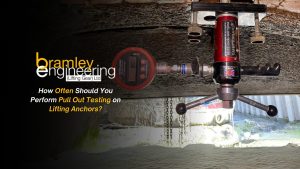
A pull out test is a method used to check whether anchors, bolts, fixings, and safety points can safely withstand the loads they will face during lifting, fall protection, or structural operations. The test works by attaching a calibrated device to the fixing and gradually applying force until it reaches either a specified safe load or the point of failure. This process measures the true holding capacity of the component. The lifting industry requires these tests to reduce the risk of catastrophic failure, leading to accidents, equipment damage, and non-compliance with safety regulations.
In this guide, we explore everything you need to know about pull out testing, including its importance, methodology, and compliance with British standards.
- What Is a Pull Out Test?
- Why Is Pull Out Testing Important?
- How Pull Out Testing Works
- Our Pull Out Testing Procedure
- What Is the British Standard for Pull Out Tests?
- Why Choose Bramley Engineering for your Pull Out Tests?
What Is a Pull Out Test?
Pull out testing is widely used in construction, lifting operations, and fall protection systems to ensure that critical components like anchor points and bolts can withstand the forces they will encounter when in use. It’s typically performed before installations to confirm load capacity using a hydraulic pull tester or tensile load tester, which applies a controlled force to the anchor point of fixing and measures capacity.
Pull testing (also called pull-out testing) is usually used prior to installation and can also be destructive if required, meaning it can apply a force until the anchor, fastener, or component fails to determine its ultimate load capacity. This test helps in selecting appropriate fixings for new installations.
- Purpose: Determines the maximum force an anchor or fastener can withstand before failure.
- Method: Applies a gradual, increasing force until the fixing pulls out, breaks, or the test limit is reached.
- Result: Establishes the load capacity and helps identify failure points such as concrete cone failure, pull-out failure, or anchor head failure.
Pull-out testing is typically performed before installations to confirm load capacity, while proof load testing is done regularly to ensure ongoing safety and compliance to pass LOLER inspections and meet British Standards.
Why Is Pull Out Testing Important?
The failure of an anchor point can have catastrophic consequences including dropped loads, damaged equipment and property, or serious injuries. Conducting thorough anchor testing with a pull out test helps prevent these issues, protecting businesses, equipment, and staff. It’s important to pull test for several reasons:
- Ensures Structural Integrity – It verifies whether anchors and fixings can withstand the required load without failing.
- Compliance with Safety Standards – Industries such as construction, engineering and any lifting operations must meet strict safety regulations, including LOLER (Lifting Operations and Lifting Equipment Regulations) and British Standards.
- Prevention of Accidents – Weak or faulty fixings can lead to structural collapses, equipment failures, and serious workplace injuries.
- Cost Savings – Identifying weak anchor points before they fail helps to prevent expensive repairs, downtime, and potential fines.
How Pull Out Testing Works
The process of pull out testing involves attaching specialised testing equipment (we use the Hydrajaws m2050) to an anchor or fixing and applying a controlled tensile force. The aim is to determine the maximum load the anchor can withstand before it pulls out or reaches a set threshold. The results help engineers and safety inspectors assess whether the anchor meets the required load-bearing capacity for its intended use.
The key components of a pull out test include:
- A hydraulic or mechanical testing device such as a Hydrajaws pull tester
- A load gauge to measure applied force
- A fixed anchor or sample material
- A controlled pulling mechanism or machine to apply force gradually
Our Pull Out Testing Procedure
Knowing how to perform a pull out test is essential for ensuring anchors and fixings meet safety standards. At Bramley Engineering, we follow a clear five-step procedure:
- Identify the Test Location – Select the anchor point or fixing to be tested.
- Prepare the Equipment – Attach the testing device securely to the fixing.
- Apply Load Gradually – Use a hydraulic or mechanical tester to apply a controlled force.
- Monitor Load Resistance – Measure the force required for failure or assess if the anchor meets the required standard without pulling out.
- Record the Results – Document the load capacity and compare it against safety standards and requirements.
Book your pull out test with us and we’ll take care of each step, scheduled at a time that suits you. With Bramley Engineering, you’ll also benefit from aftercare assistance including repairs, replacements and digital record-keeping. Plus, you can access additional ongoing services such as LOLER tests and proof load testing, all handled and managed by us. Contact us today to find out more.
Understanding Pull Test Scores
The “score” on a pull test refers to the recorded load at which the fixing either holds firm or fails. This is typically measured in kilonewtons (kN) and compared against the required safety threshold. If an anchor meets or exceeds the required load rating, it passes; if it fails prematurely, the anchor point will need to be corrected through reinforcing or replacing the anchor. Don’t worry, we can help with repairs, replacements and reinforcements if you need them.
How Do You Calculate Pull Out Test Results?
Our Hydrajaws pull tester automatically calculates the results of each pull out test and the calculation is based on the force applied and the anchor’s response. The formula for determining the pull out strength is typically:
Pull Out Strength = Load Applied / Surface Area
The results are then checked against the safety standards needed for the application to see if the anchor can be used safely.
What Is the British Standard for Pull Out Tests?
Pull out testing in the UK follows specific British Standards to ensure consistency, accuracy, and reliability. The most relevant standard for anchor testing is BS 8539, which sets out best practices for selecting, installing, and testing anchors in construction and lifting applications.
The standard outlines clear responsibilities for specifiers, manufacturers, installers, and testers, ensuring that only the correct anchors are used and installed according to manufacturer guidelines. Proper procedures must be followed, including correct drilling methods, hole cleaning, and torque application, to ensure accurate test results and full compliance. BS 8539 also requires pull out testing to be carried out on-site using calibrated equipment, with results recorded and compared against required performance criteria.
Why Choose Bramley Engineering for your Pull Out Tests?
With over 40 years of experience in the lifting and engineering industry, we always conduct pull-out testing with accuracy and in full compliance with BS 8539, ensuring that all anchor points, fixings, and structural supports meet the highest safety standards for any lifting operations.
Our industry accreditations including LEEA Full Membership and UVDB, THSP, and ISO 9001 certifications, demonstrate our commitment to industry-leading safety practices. We’re also a fully insured company with Coughlan Business Insurance, and we guarantee safe, reliable, and fully documented pull-out testing services that keep your operations compliant, efficient, and secure.
Whether you need a pull out test for lifting equipment, fall protection systems, or structural anchors, we’re here to help. Get in touch with Bramley Engineering today for reliable pull out testing – call us on 01525 375225 or drop us an email at enquiries@bramleyengineering.co.uk.