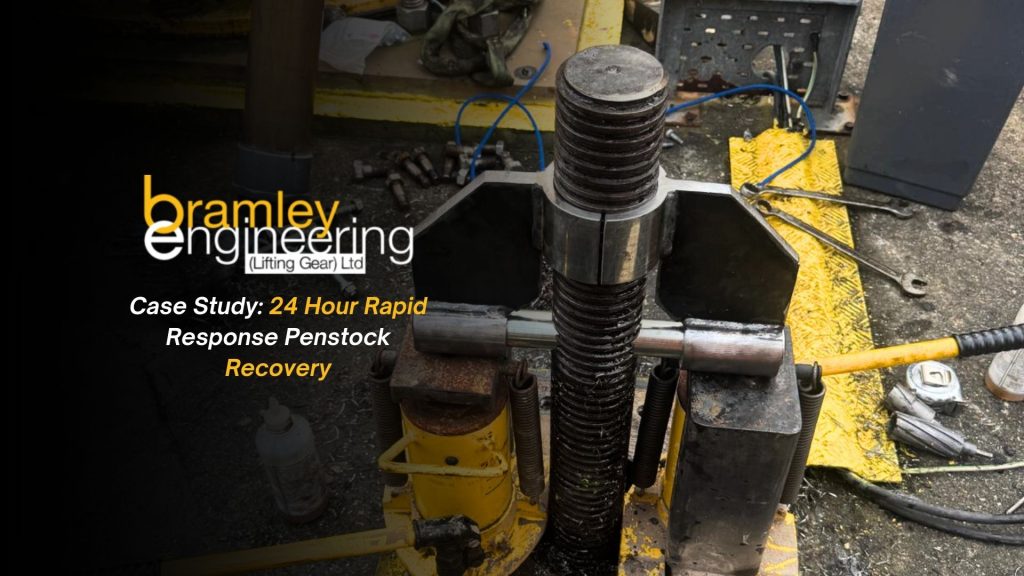
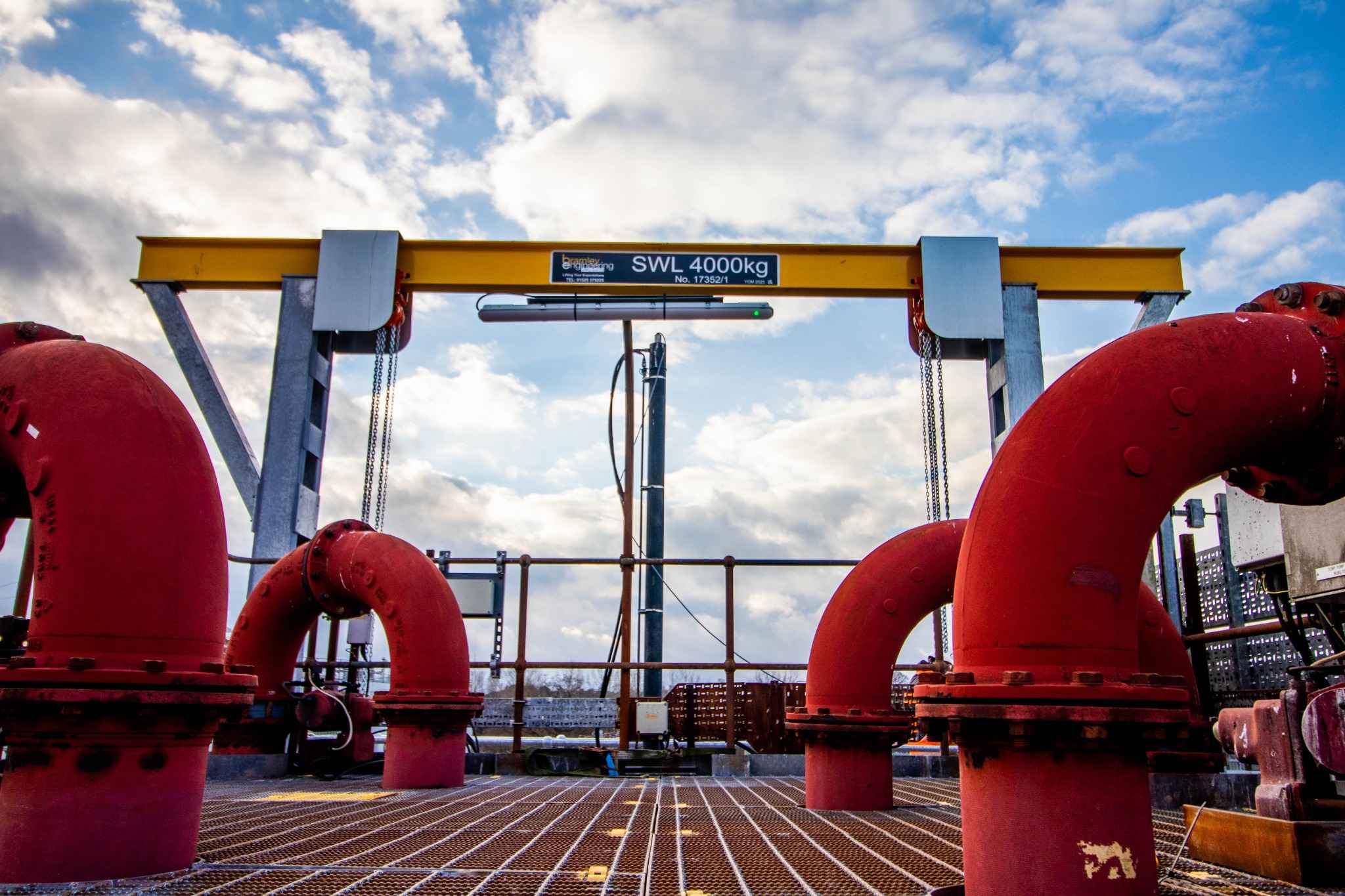
A Thames Water sewage treatment works needed a more reliable way to access and operate a weir penstock at their inlet channel and storm collection chamber, where incoming flows are managed and controlled before being directed through the site. When the hydraulic actuator failed (used to lift the penstock), the team required a safe rescue method to lift the penstock quickly, without unnecessary disruption to site operations.
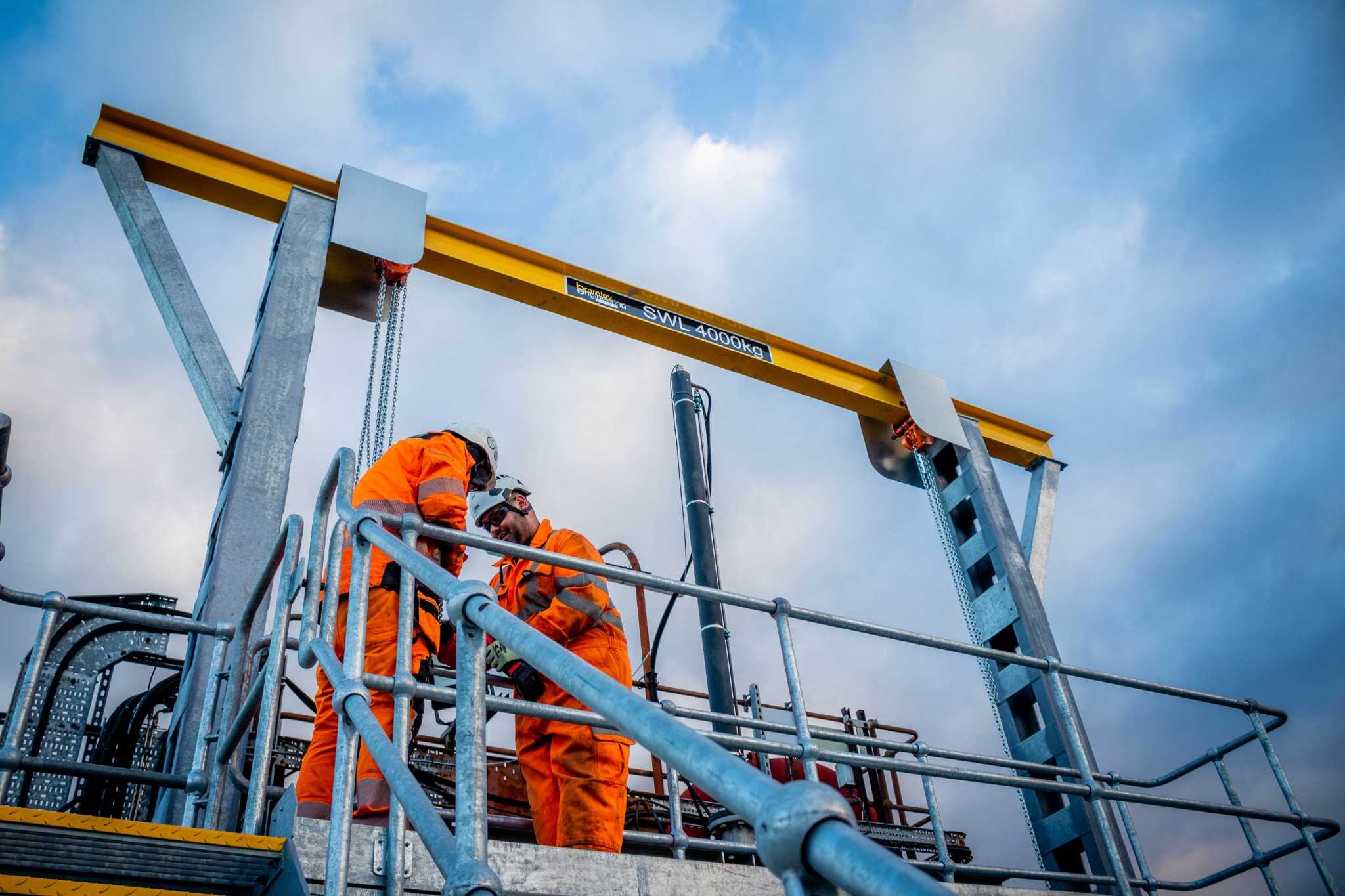
Bramley Engineering designed, manufactured and installed a bespoke monorail rescue gantry and access steelwork to provide safe, compliant 24/7 access and significantly reduce downtime.
Project Summary
- Client: Thames Water
- Project: Design, manufacture and installation of a weir penstock rescue gantry, access steelwork, removable access bridge and an integrated chain block hoist system.
- Purpose: Provide a reliable method to lift the penstock when the hydraulic actuator fails, and allow safe access to and operation of the penstock at all times.
- Outcome: 24/7 access, reduced operational downtime, and prevent reliance on mobile crane call-outs when existing systems fail.
- Completion Date: December 2025
- Location: Hogsmill, South London, UK
The Challenge
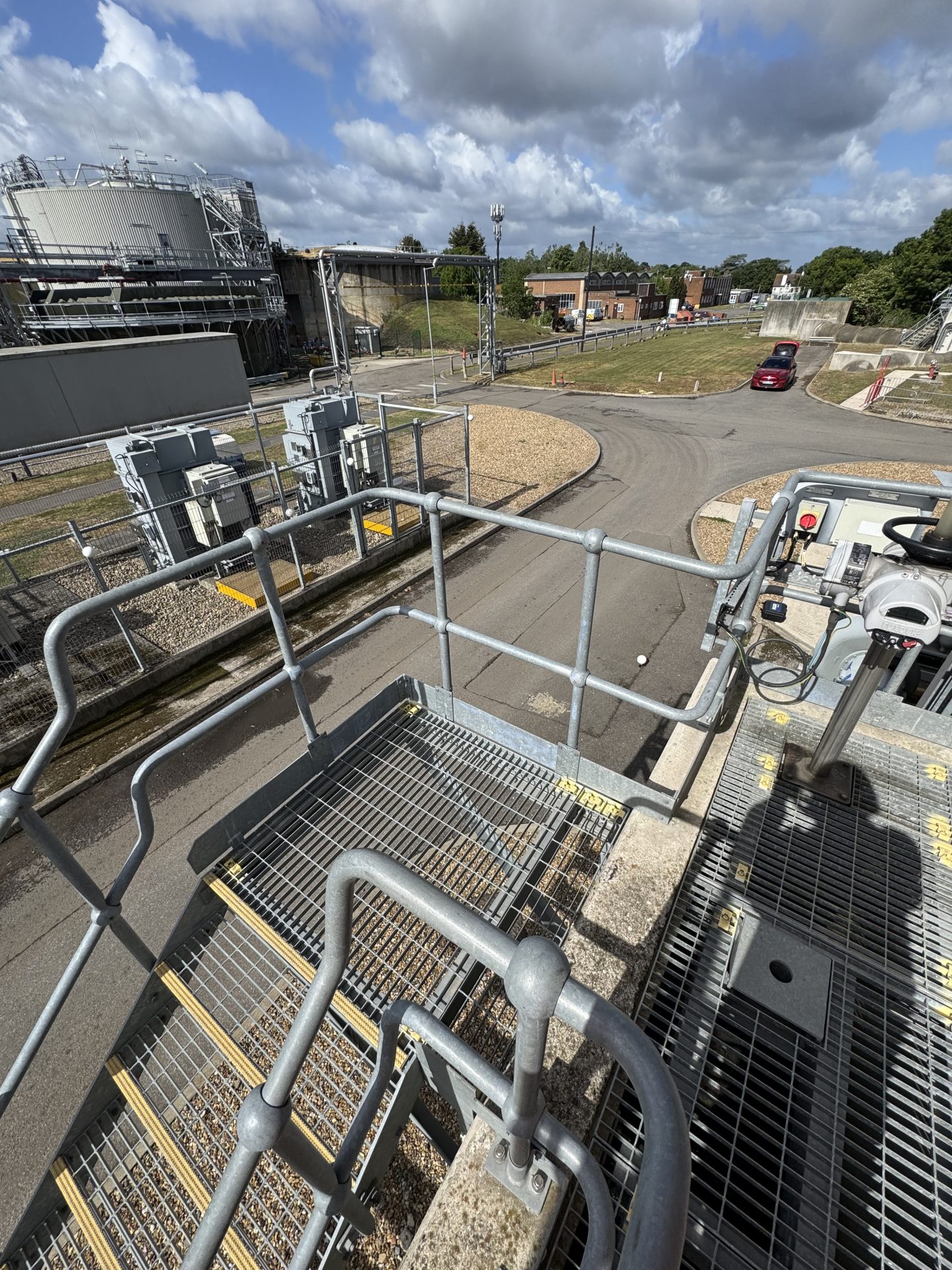
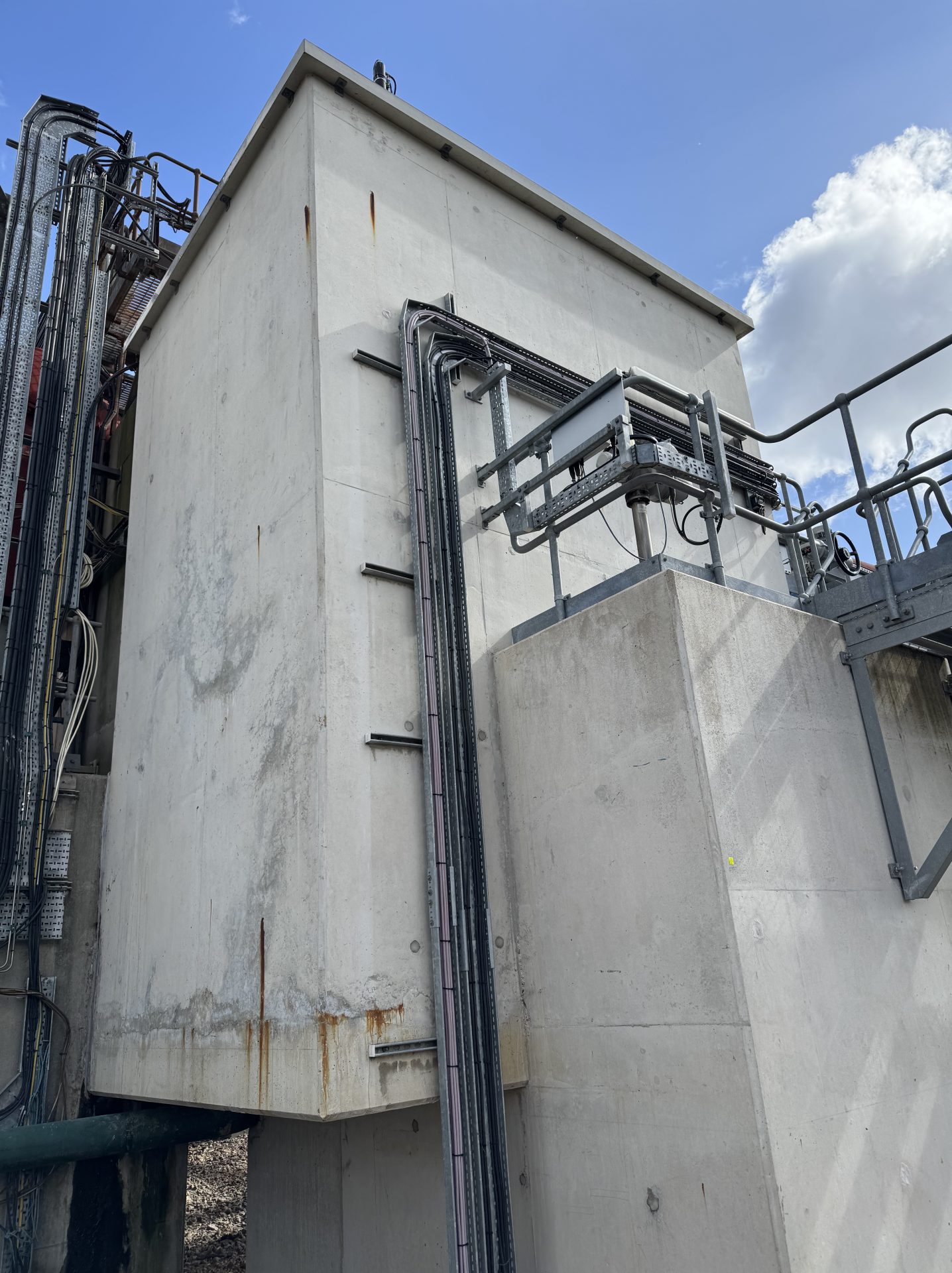
The Thames Water had a recurring issue with the weir penstock hydraulic actuator, which at times prevented the penstock from being lifted – a necessary and frequent operation. There was limited safe access to the penstock, which often failed, and regularly needed a mobile crane to be called out to site to carry out the recovery operation. Thames Water contacted Bramley Engineering to design and install a dedicated rescue lifting solution, supported by upgraded access steelwork for safer, more efficient operation.
-

- Before
-
- Before
Engineering Challenges
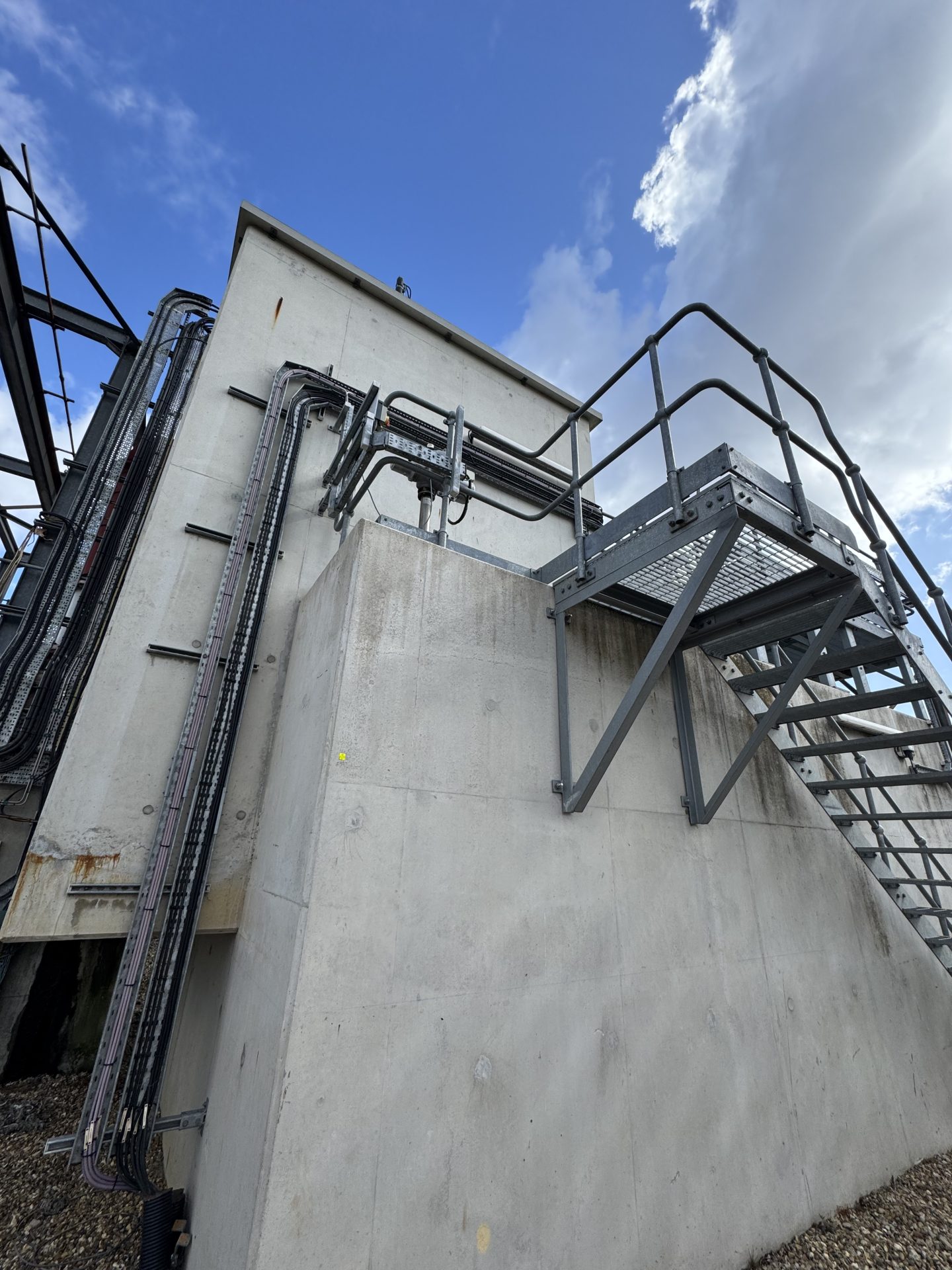
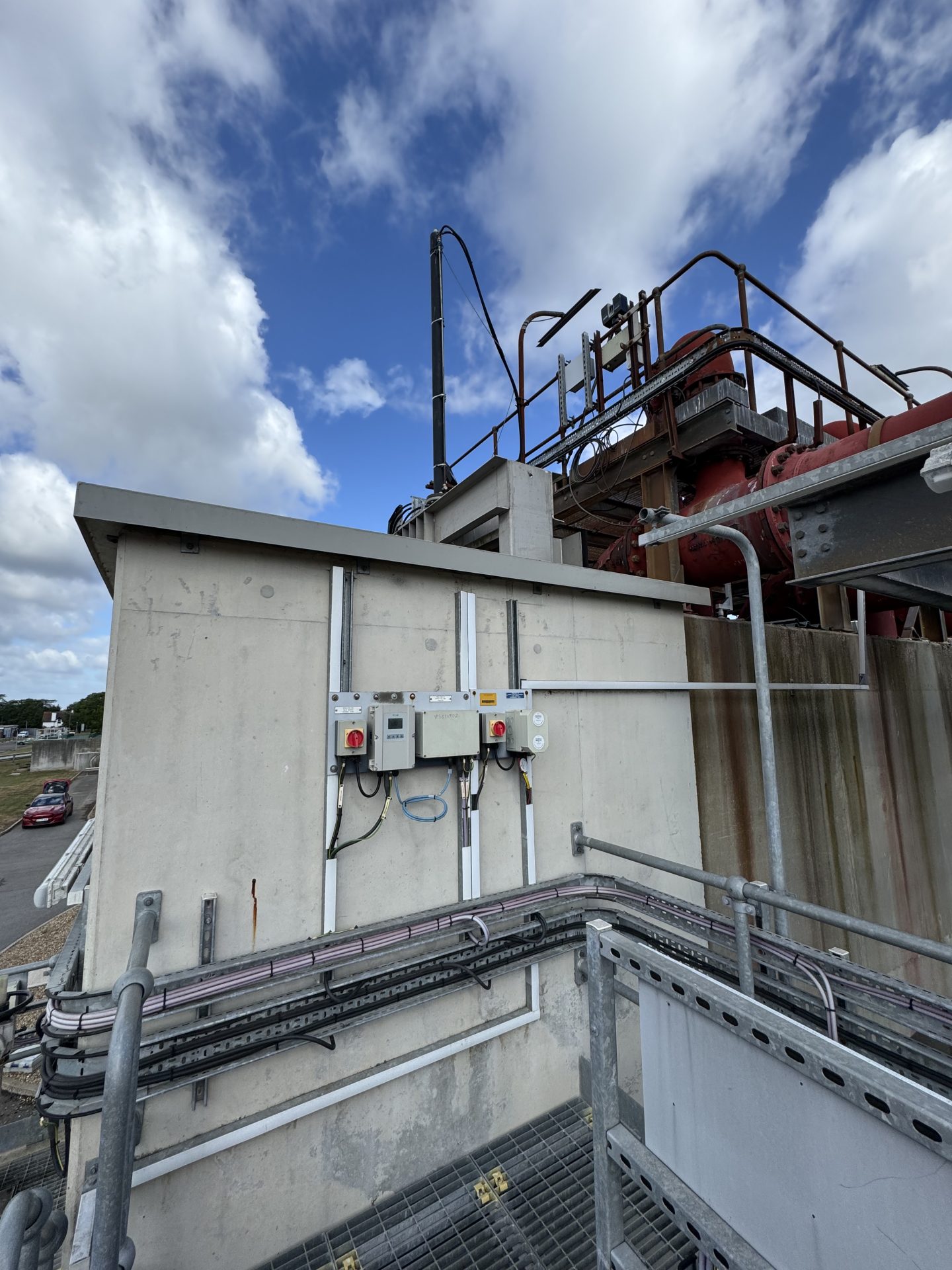
Designing a rescue gantry and access upgrade for a live sewage treatment site meant working within tight physical and operational constraints. The solution needed to be structurally robust, fully compliant, and integrated precisely with existing assets, without limiting day-to-day access or future maintenance.
The engineering brief came with some site constraints:
- Restricted space: Limited working room and existing equipment meant a ground-supported structure was not practical.
- Removable lid and roof: The chamber lid and roof had to remain removable, so all new steelwork was designed to work around this requirement.
- Precision interfaces: New components had to align accurately with existing steelwork, bolt hole positions and handrail lines to ensure a safe, seamless fit.
- Live-site controls: The project required careful coordination of permits, lift plans, documentation and access restrictions to complete the work safely on a live sewage treatment site.
-
- Before
-

- Before
The Solution
Step 1: Work out a reliable rescue lift method
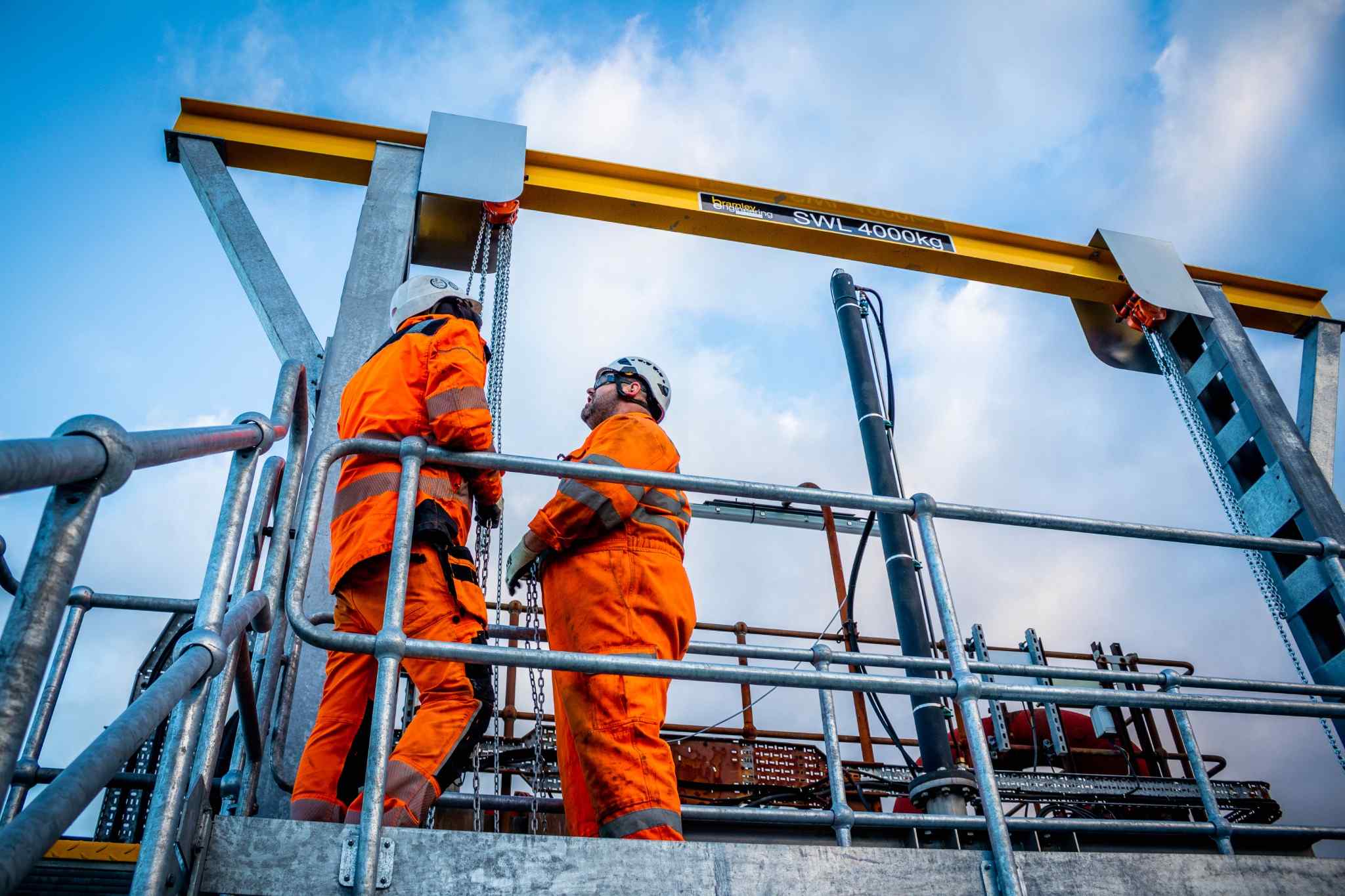
Because the hydraulic actuator could not be relied on as the only lifting mechanism, we decided the best solution would be a dedicated rescue approach: a monorail gantry with chain block hoists to lift the weir penstock safely whenever required. This gave the Thames Water team a consistent, practical method that can be used at any time.
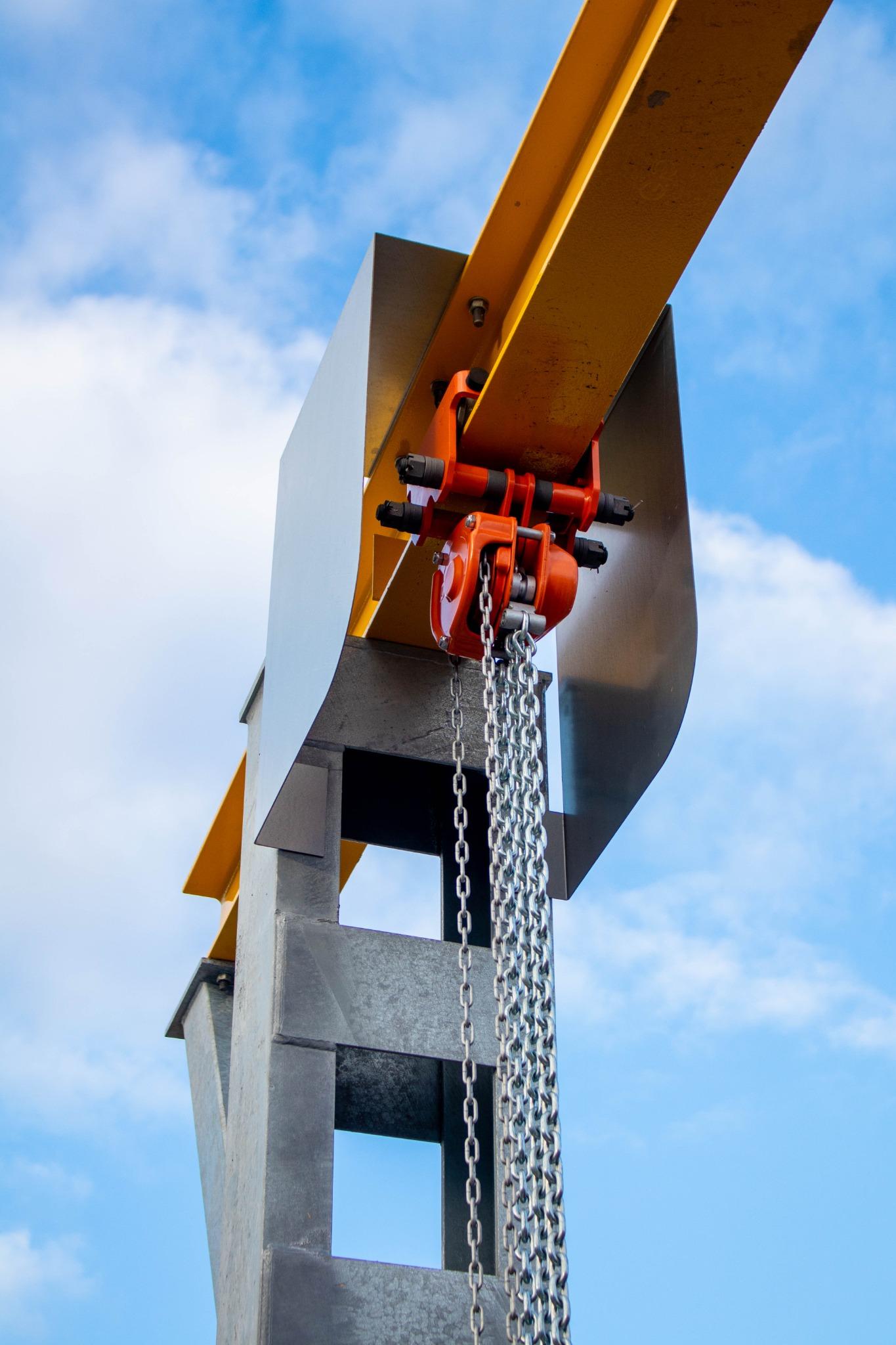
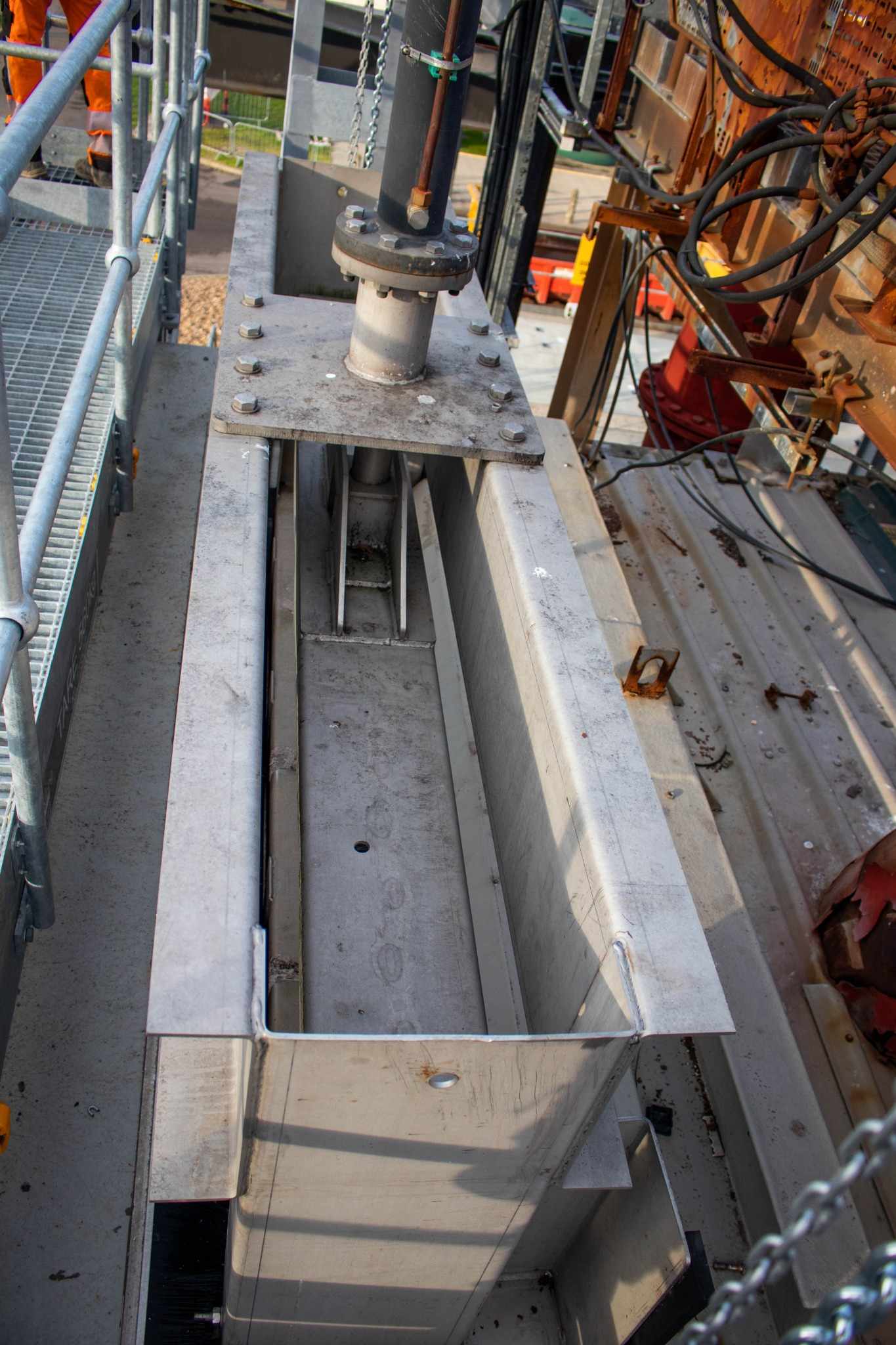
Step 2: Designed around obstructions
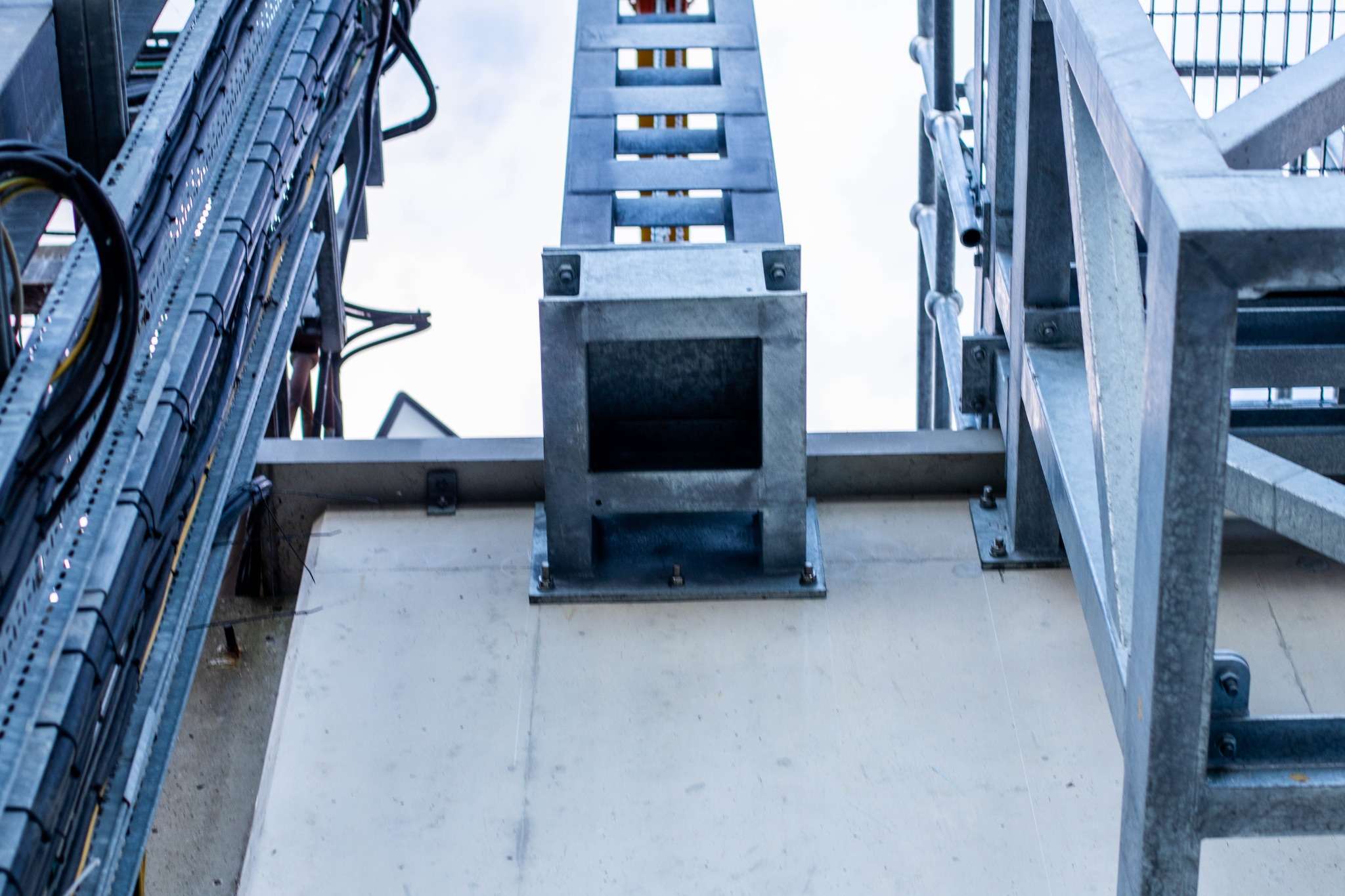
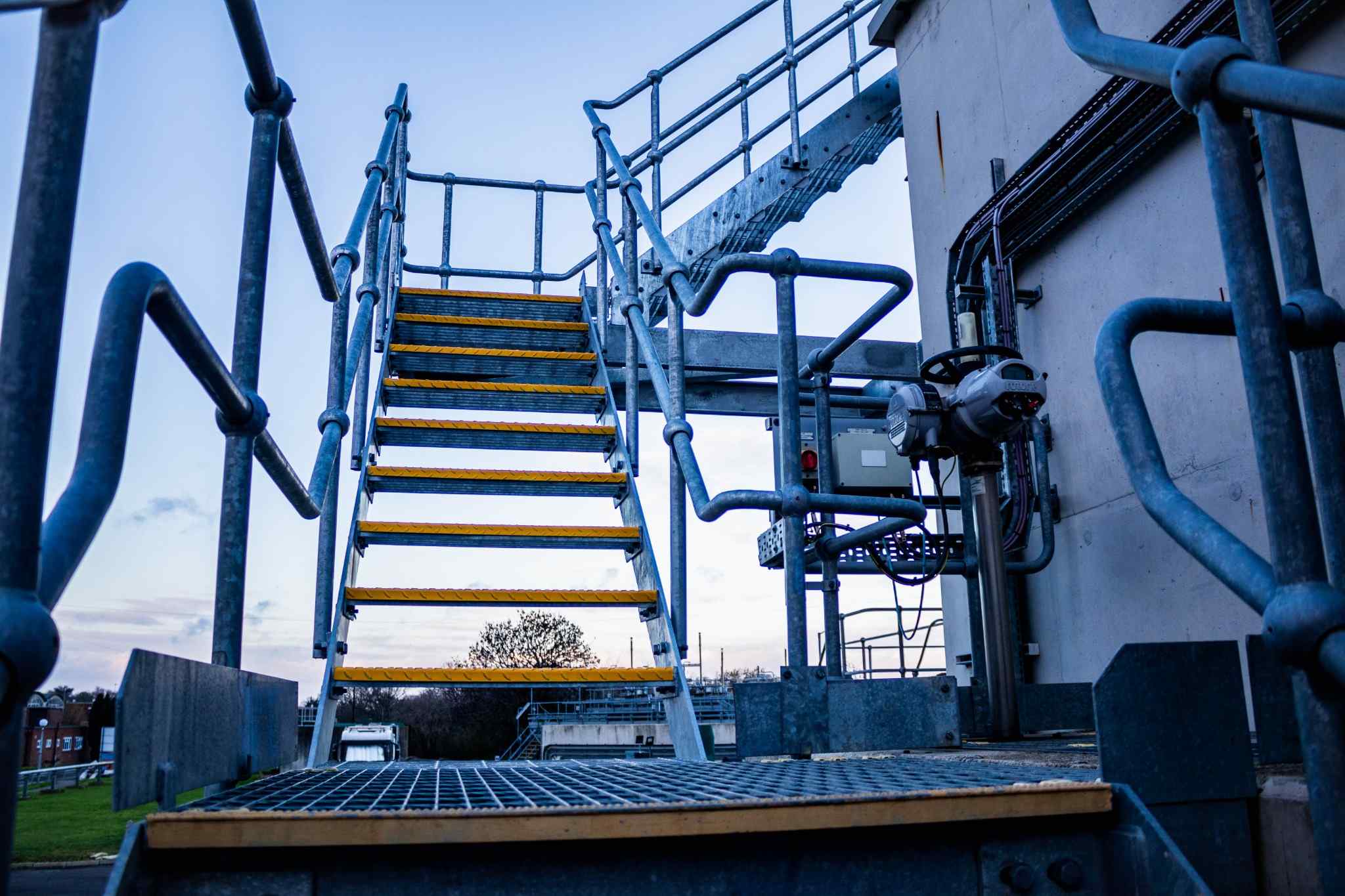
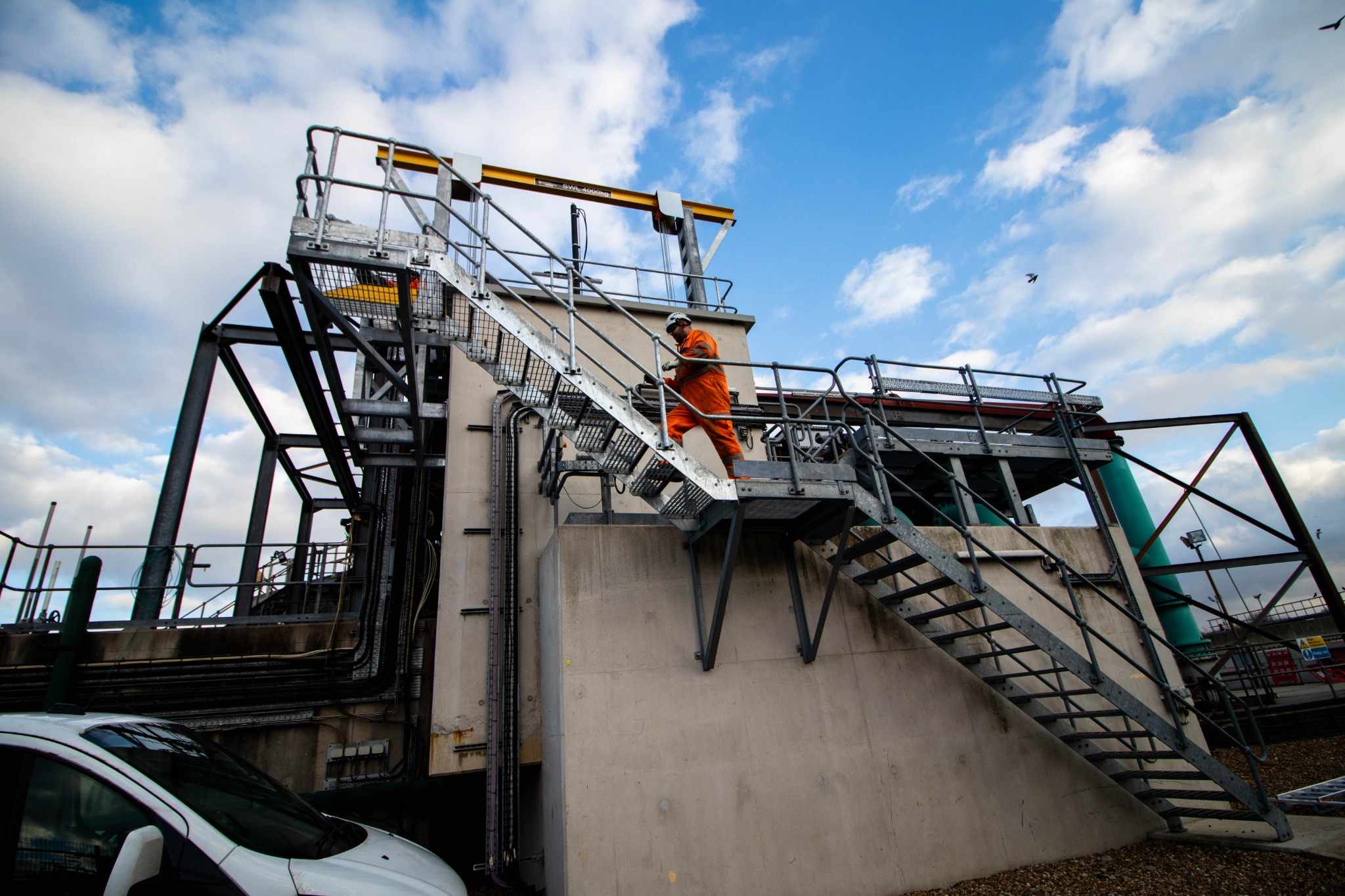
The design had to solve two clear constraints. First, space was limited and the area already had existing fixtures to work around, so a ground-supported structure would have created new obstructions at floor level. The most efficient way to improve access while keeping the footprint minimal was to extend the existing stairs and access walkway.
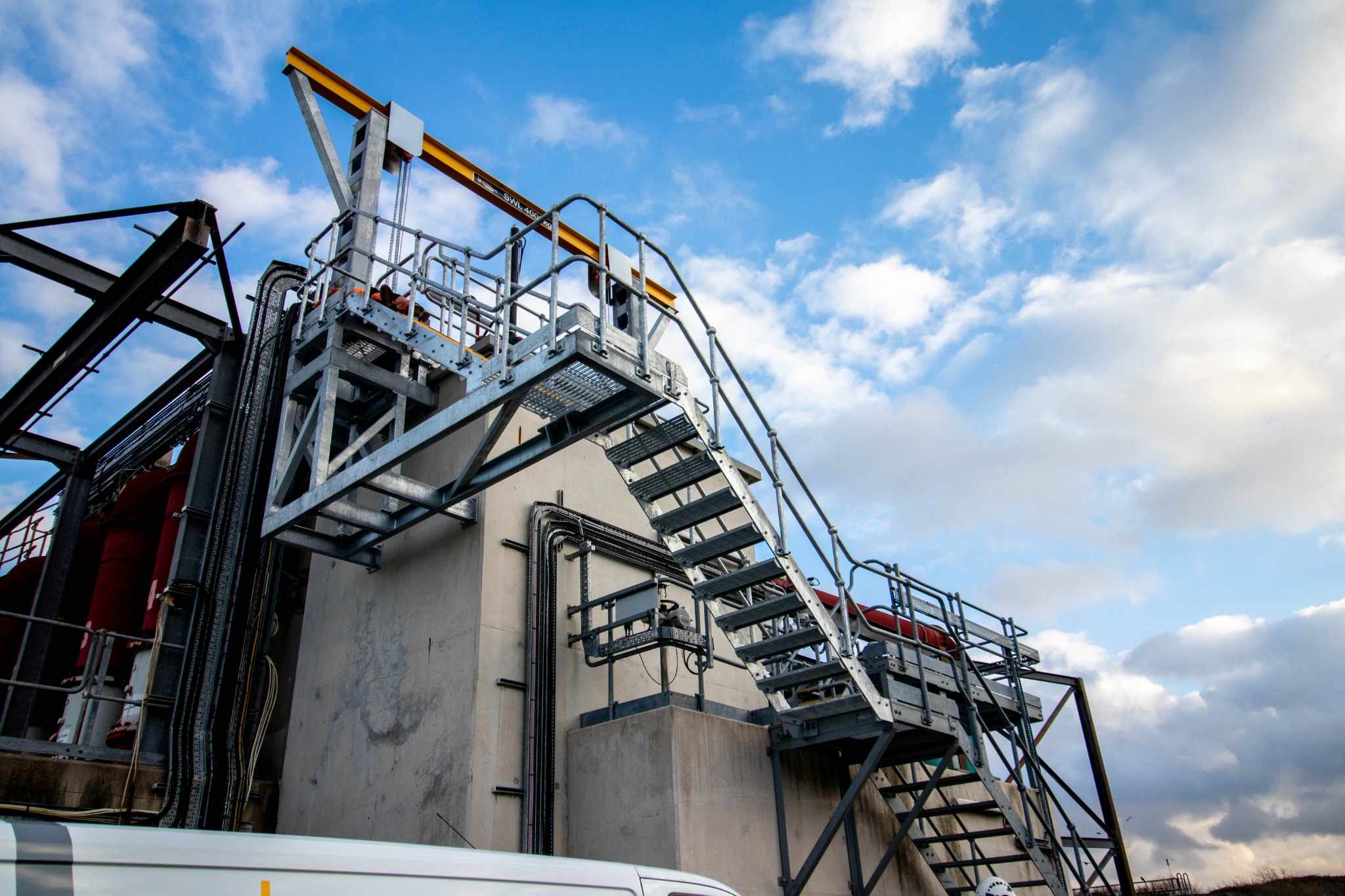
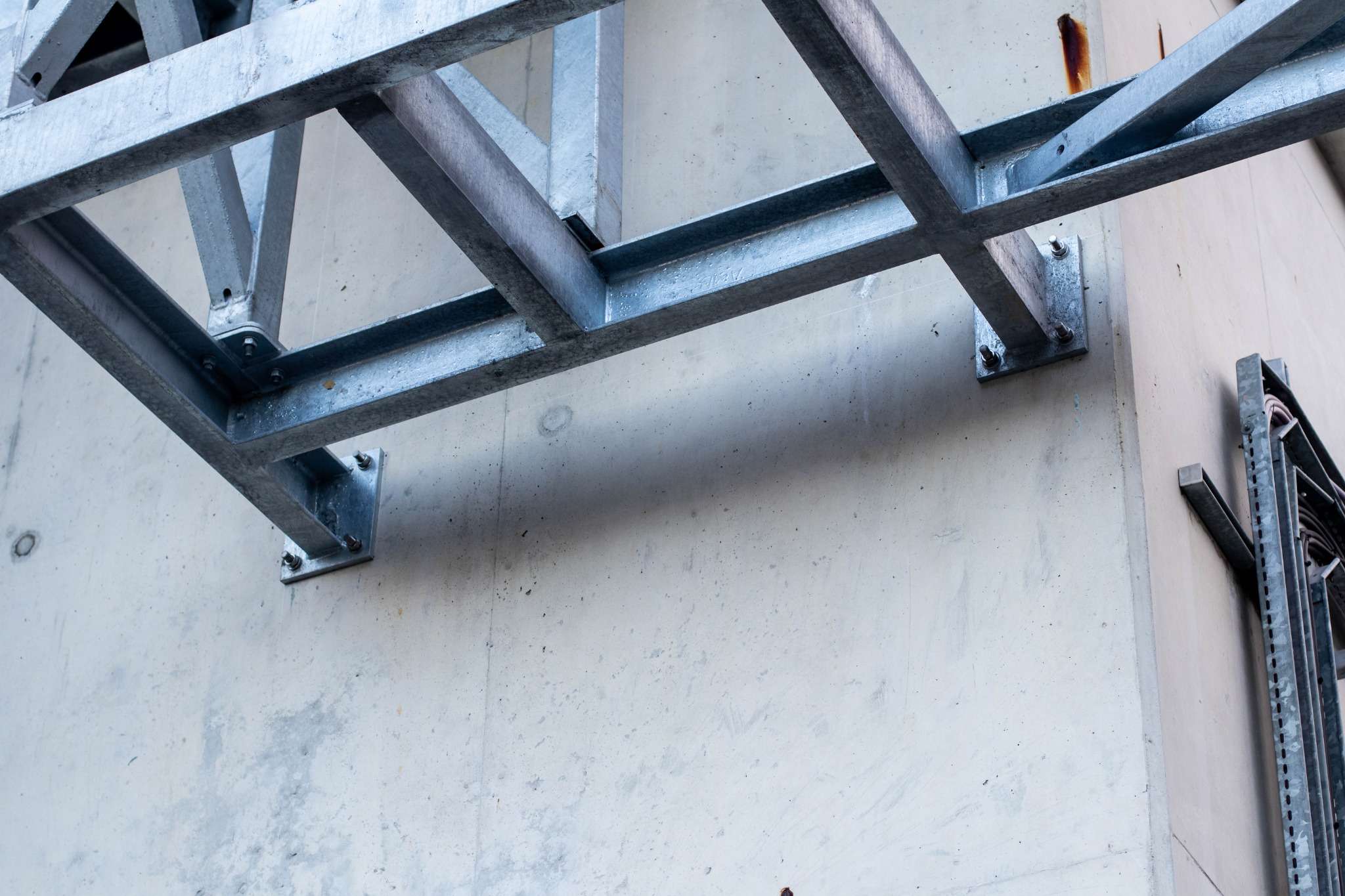
Second, the storm chamber lid and roof still needed to remain removable for ongoing maintenance, so we could not introduce steelwork that would block or restrict removal. To preserve that access, we affixed the rescue gantry on the side walls of the storm chamber, providing a secure lifting solution while keeping the lid clear when it needs to be lifted out.
Step 3: Survey, 3D CAD design and verification
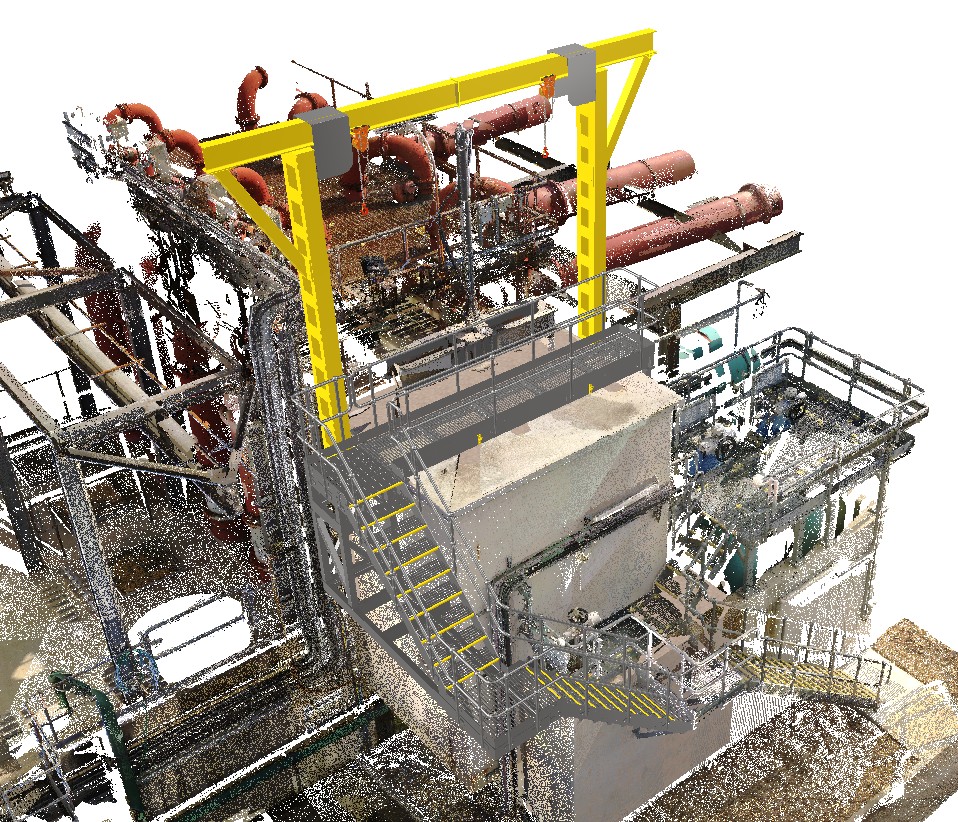
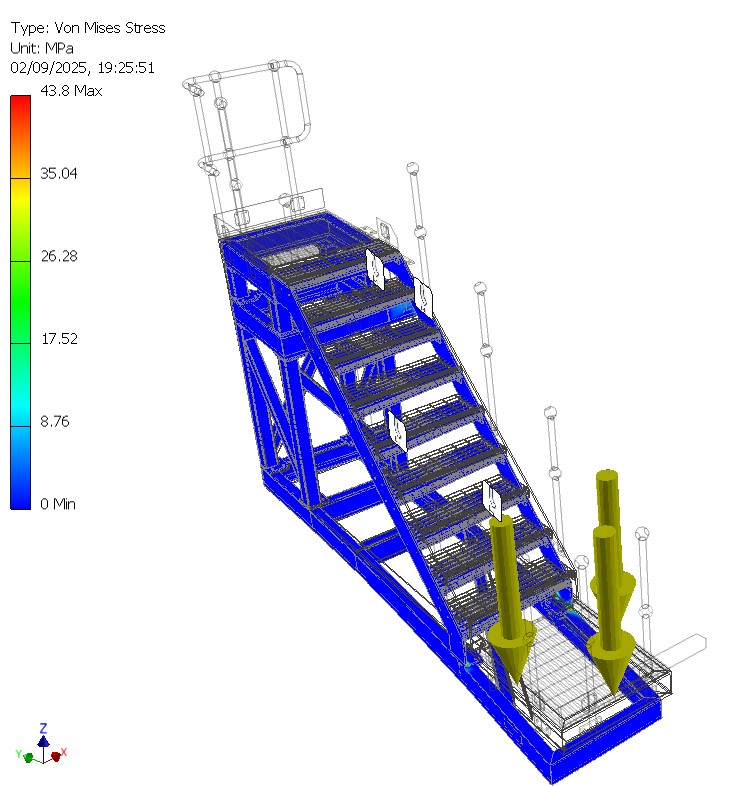
Because the new steelwork had to interface precisely with existing steelwork, bolt holes and handrail lines, we carried out detailed preparation and testing to get it right first time and verify performance before handover.
- Pre-site survey and 3D scanning
- Stress analysis to validate loads, reactions and deflection prior to manufacture
- Installation planning around site regulations, permits and controls
-

- 3D scan
-

- Von Mises Stress Analysis
Step 4: Build a removable access solution over the chamber
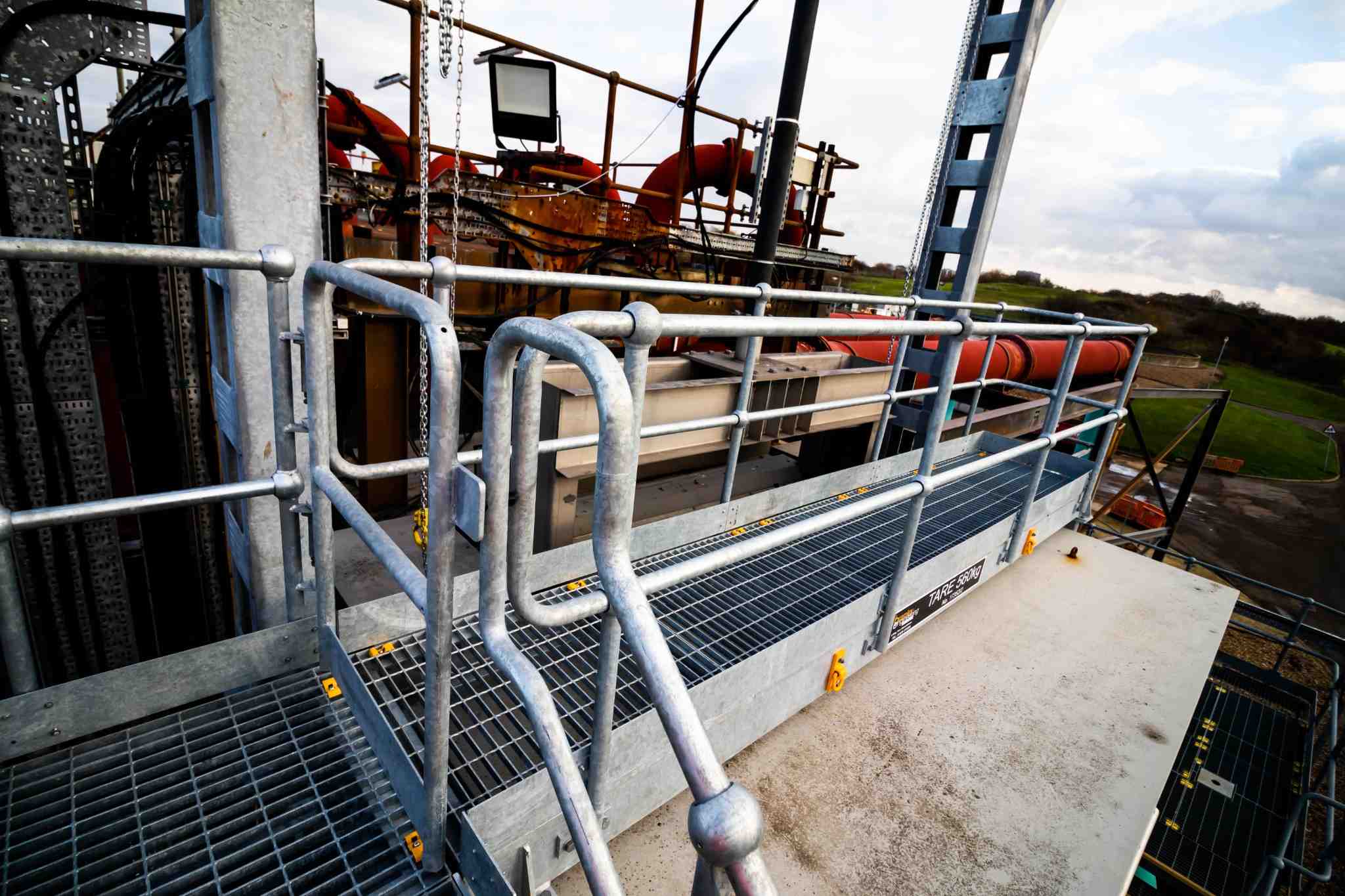
the new chain blocks and lifting gantry needed to be accessible but the storm chamber lid still needed to be removable for ongoing maintenance, any new steelwork had to be designed around these requirements. Rather than installing a fixed platform that would restrict storm chamber lid removal, we engineered a removable bridge that spans the lid and provides a safe, stable crossing point during day-to-day operation.
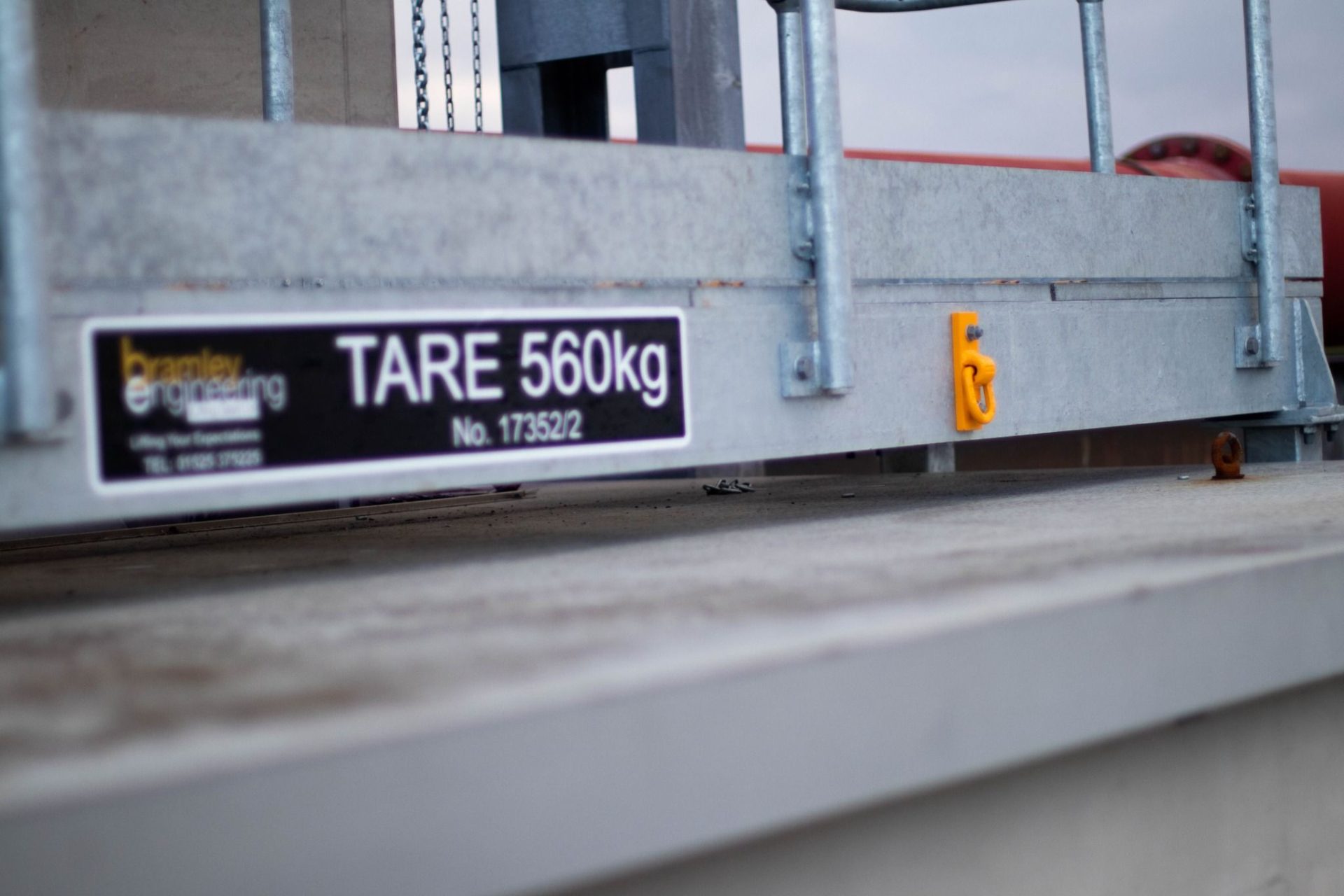
Fabricated in-house, the bridge was designed with integrated lifting eyes so it can be lifted out in a controlled way whenever the lid needs to be removed. With a tare weight of 560 kg, the lifting points and handling method were built into the design from the outset, supporting safer removals and reinstalls, and helping to maintain access without compromising future serviceability.
Step 5: Manufacture, delivery and installation
With the design finalised, we manufactured the gantry and access steelwork in-house to maintain full control over quality, fit and installation standards. Components were then delivered to site ready for a controlled install by Bramley Engineering. Installation was planned around permits and live-site access restrictions, to minimise disruption and ensure a smooth handover.
Step 6: LOLER testing, proof load testing, and pull-out testing
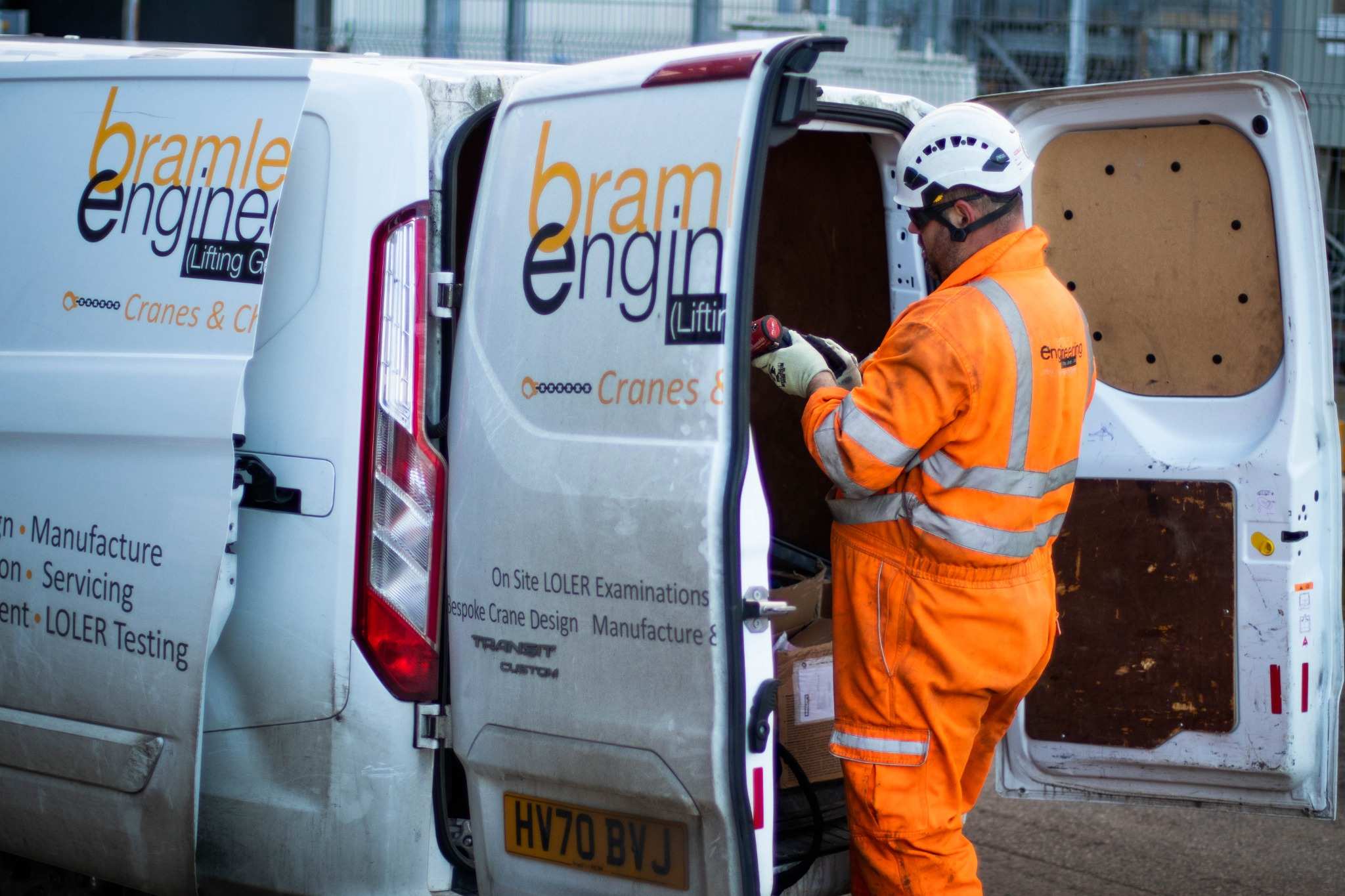
Following installation, we completed a full LOLER test of the finished structure to confirm the gantry and lifting system was safe, compliant and suitable for long-term use. As part of this, we completed proof load testing to confirm the gantry and lifting arrangement performed as intended, and pull-out testing to verify the integrity of the fixings into the existing structure.
As part of handover we issued the relevant certification, valid for the next 12 months, along with the supporting documentation to aid ongoing inspection planning and compliance.
Key Suppliers
This project was delivered with support from trusted UK suppliers, helping us maintain quality, traceability and reliable lead times throughout design, manufacture and installation.
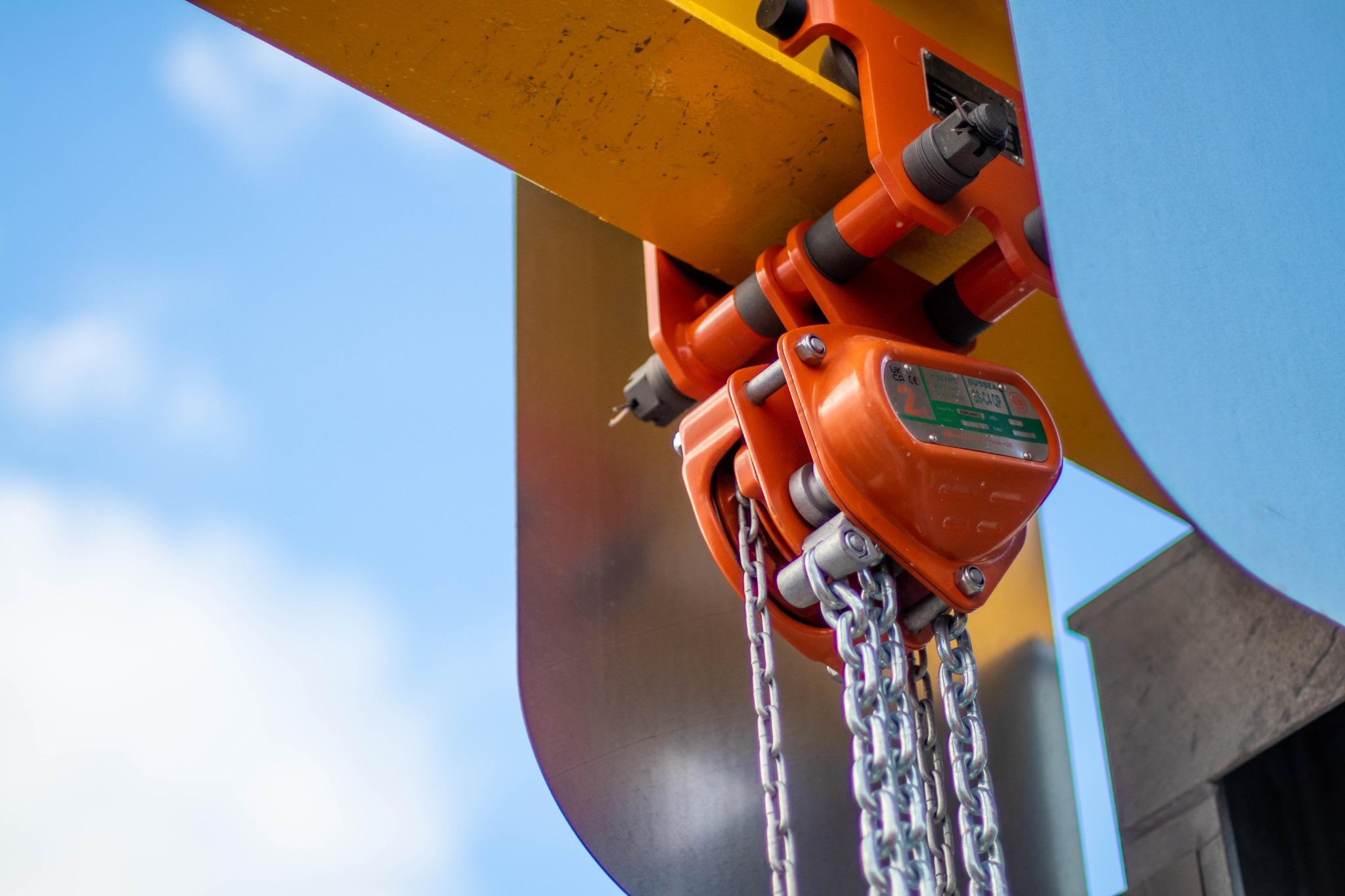
- Chain blocks: William Hackett supplied the chain block hoists used as part of the rescue lifting system, providing the dependable lifting performance required.
- Steel: AJN Steel Stock supplied the primary steel for the gantry and access steelwork. Using a consistent, reliable steel supplier supported build quality, material traceability and efficient fabrication planning.
- Profile plates: HBH Laser produced the profile plates for the project, ensuring clean interfaces where the new steelwork had to align precisely with existing structures.
The Results
- 24/7 access to the penstock for operation and maintenance
- A reliable rescue lift method when the actuator fails, improving resilience on a known recurring issue
- Reduced need for mobile crane call-outs, lowering cost and disruption
- Faster recovery from faults, helping to reduce downtime and support efficient operation across the inlet channel and storm collection system
- The removable bridge provides a safe crossing point, while still allowing controlled removal whenever the chamber needs to be opened for maintenance.
Conclusion
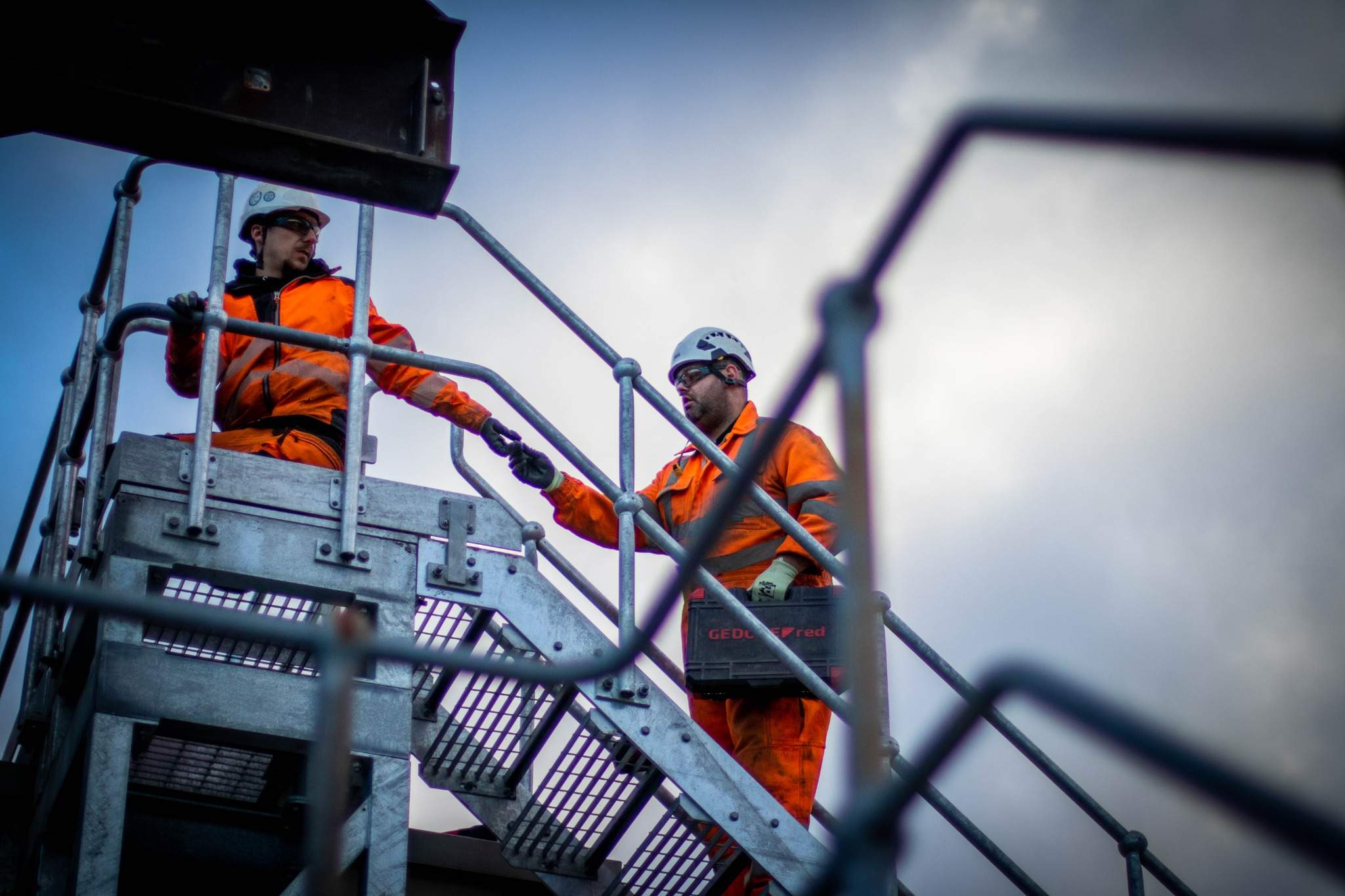
This project demonstrates Bramley Engineering’s ability to deliver practical, compliant lifting and access solutions in complex live-site environments. By working closely throughout the project, combining their operational knowledge with our engineering expertise, we were able to agree the most effective approach for the site. The result is a rescue gantry and access upgrade that improves safety and efficiency without compromising the site’s original design. Critical removable elements, including the storm chamber lid and roof, remain fully accessible for routine servicing, supported by carefully planned interfaces and purpose-designed removable components. The Thames Water sewage treatment works now has a reliable method to rescue and operate the weir penstock, reduce downtime, and avoid unnecessary mobile crane call-outs.
Email: enquiries@bramleyengineering.co.uk
Phone: 01525 375225