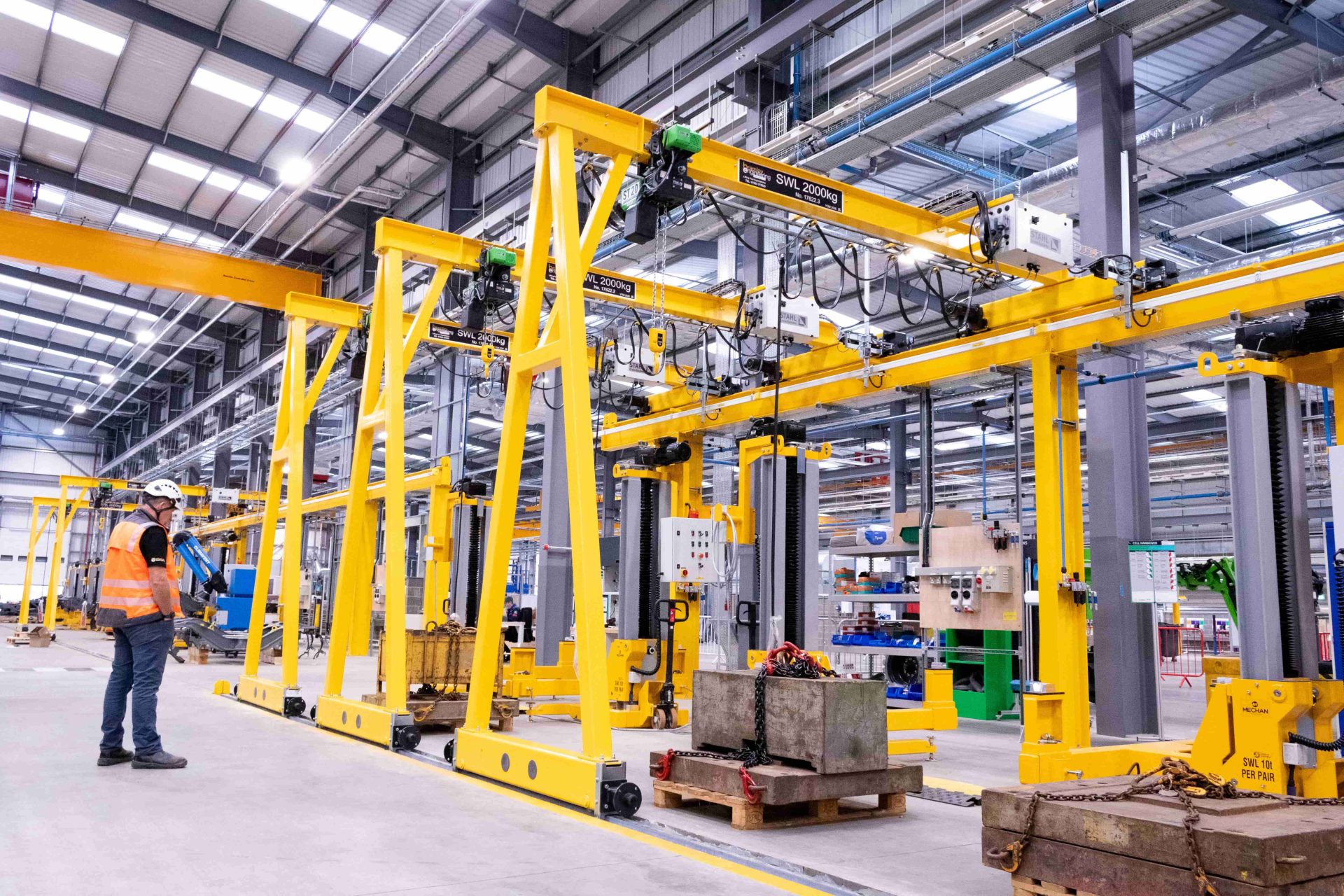
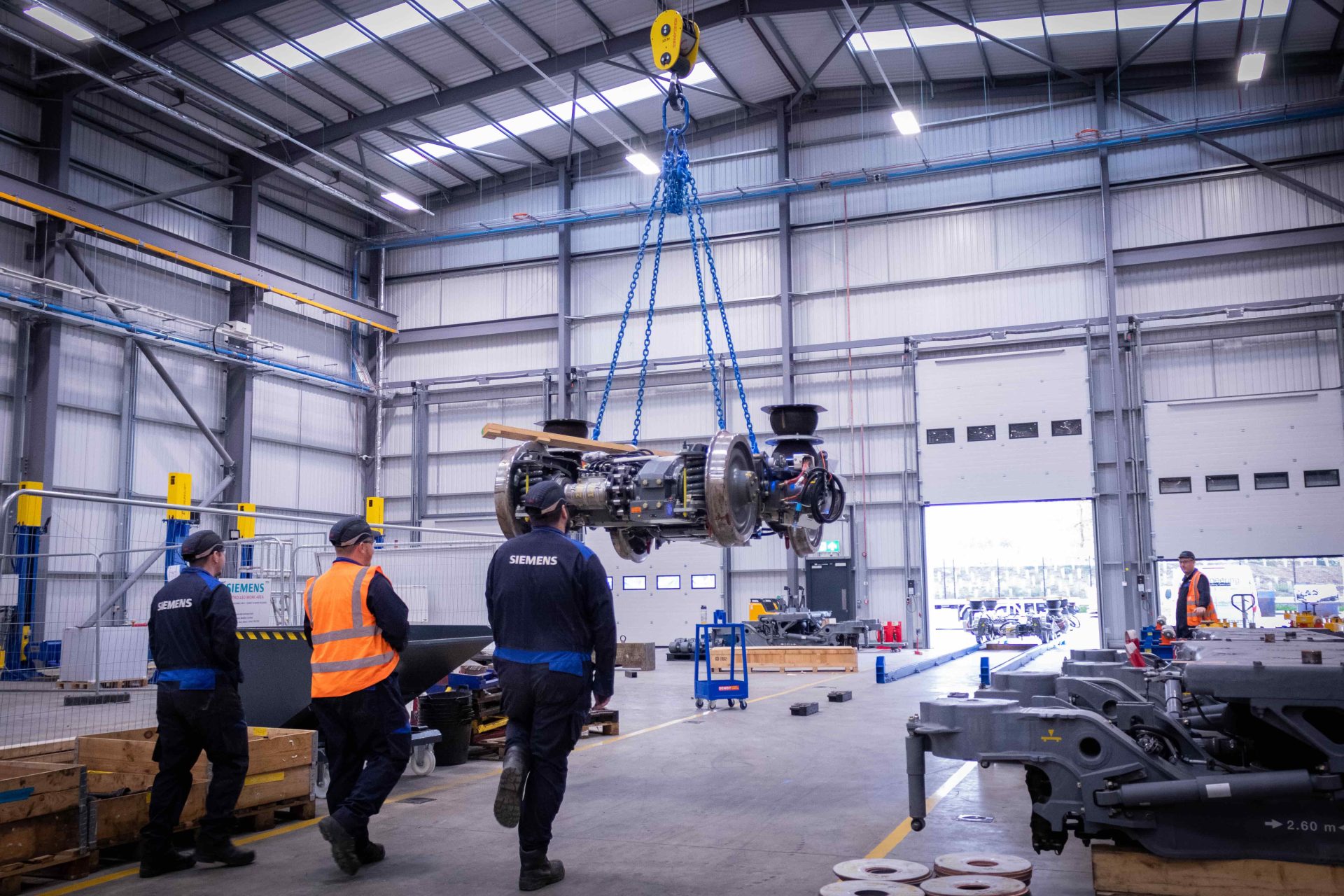
Bramley Engineering designed, manufactured and installed five bespoke semi-portal cranes for Siemens Mobility’s new Goole Rail Village, providing independent lifting capability across multiple train bogey maintenance areas. The solution reduced the amount of supporting steelwork required, improved access around the facility and incorporated additional load capacity to accommodate future expansion.
Siemens initially approached Bramley with a lifting requirement, and by working closely with the customer, the team explored several configurations before developing a system of five semi-portal cranes, each with a 2-tonne safe working load (SWL).
The installation forms part of Siemens Mobility’s £240 million investment in Goole Rail Village, a 67-acre rail manufacturing, logistics and innovation hub supporting UK train production and maintenance.
Project Summary
- Client: Siemens Mobility
- Location: Goole Rail Village, East Yorkshire
- Project: Development, design, manufacture and installation of five bespoke semi-portal cranes
- Lifting Capacity: 2 tonnes SWL per crane
- Purpose: Support the safe lifting and movement of train bogeys during maintenance operations
- Key Features: Five independently operated semi-portal cranes incorporating STAHL CraneSystems equipment, festoon brackets profiled and folded by sister company Bramley Aerospace, phased installation and provision for future expansion.
- Delivery: Approximately 20 weeks from order through installation, following an iterative design development phase
The Challenge
Siemens Mobility needed a lifting solution that would allow operators to move and position train bogeys independently across multiple maintenance areas at its new Goole facility.
Although the operational requirements were established, the most suitable crane configuration had yet to be determined. Over approximately 12 months, Bramley Engineering worked with Siemens to explore different arrangements, including individual compartment crane systems and conventional overhead travelling crane systems.
A key consideration was maintaining access through the central aisle while providing individual lifting systems for the maintenance areas. The cranes needed to be positioned so they could support day-to-day lifting operations without unnecessarily restricting movement around the workshop.
The design also needed to address several practical requirements:
- Independent lifting: Operators needed access to their own cranes without relying on a shared system.
- Clear central access: The cranes needed to be able to park out of the way when not in use, keeping the central aisle accessible.
- Reduced steelwork: The supporting structure needed to provide sufficient strength without unnecessary additional cost or obstruction.
- Future expansion: The design needed to accommodate additional cranes as Siemens’ requirements developed.
- Coordinated installation: Work needed to fit around other contractors installing services throughout the new facility.
Having previously installed overhead travelling cranes at Siemens’ Lincoln facility in 2018, Bramley Engineering drew on its experience to develop a more space-efficient arrangement for Goole.
The Solution
Step 1: Develop a more efficient crane configuration
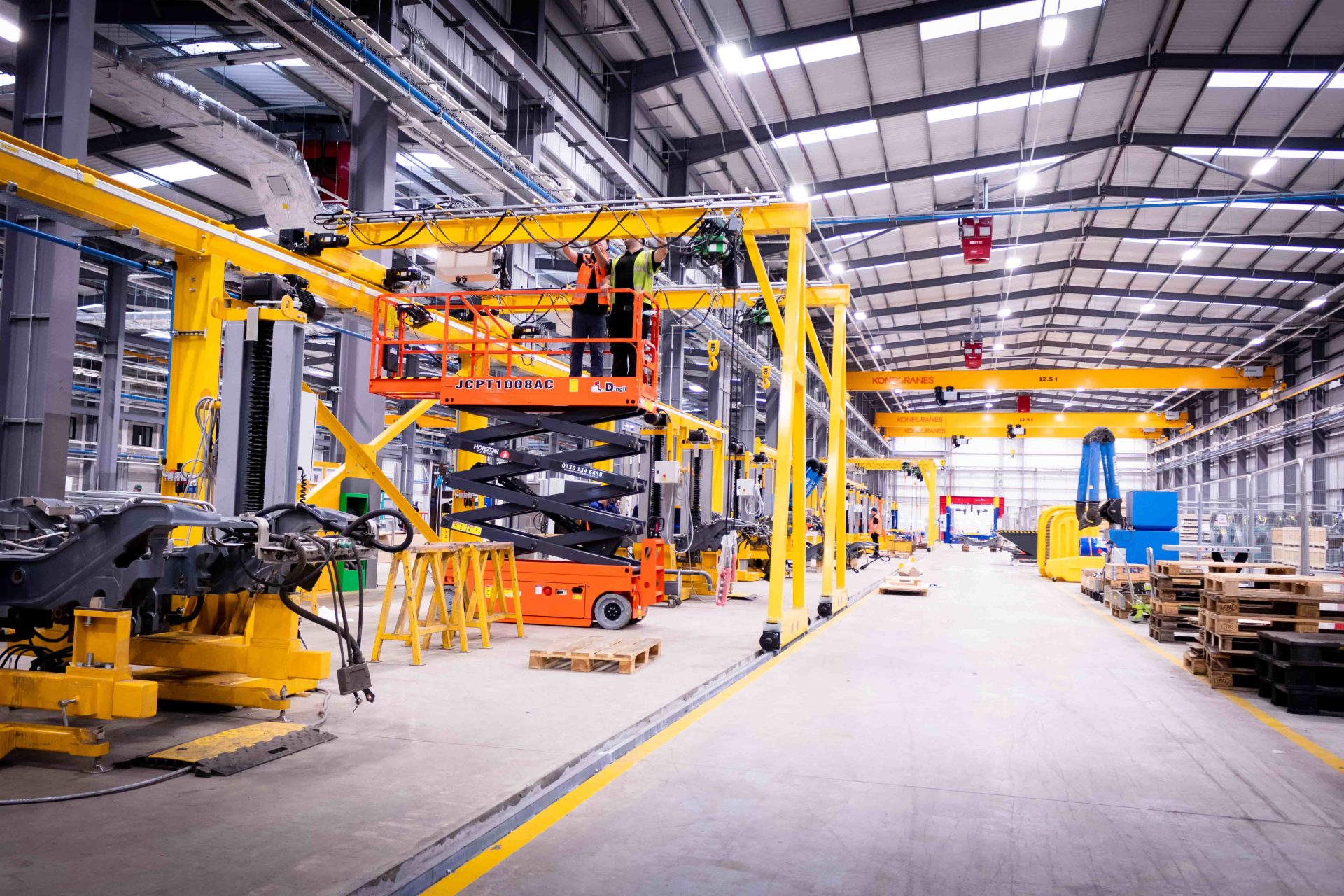
Following various crane design iterations, Siemens placed an order for five bespoke semi-portal cranes, arranged across two separate gantry and floor rail systems on opposite sides of a central aisle.
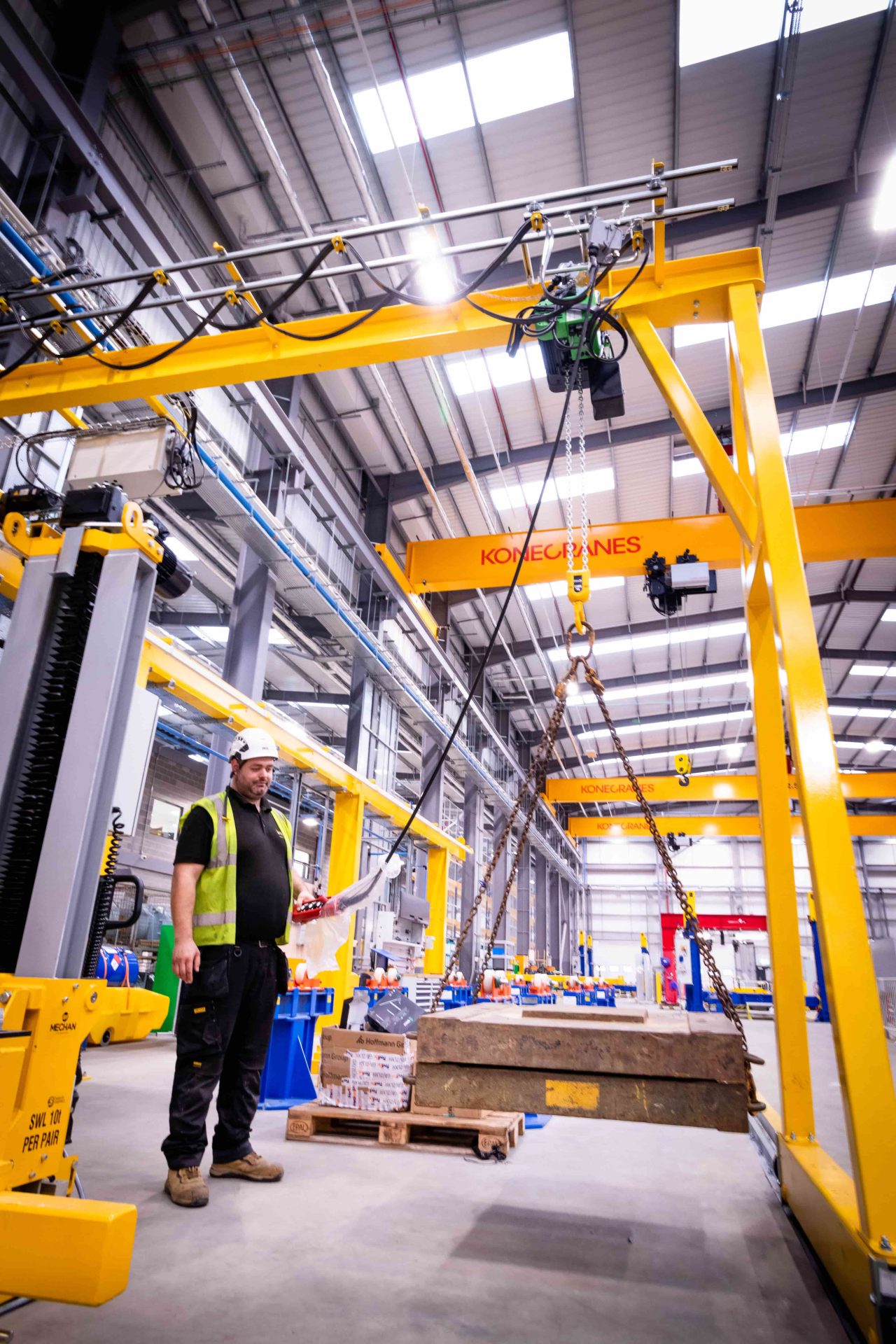
Unlike conventional overhead travelling cranes supported on elevated runways on both sides, each semi-portal crane uses a raised gantry on one side and a floor-level rail on the other. This arrangement allows operators to carry out lifting tasks independently within their designated maintenance areas.
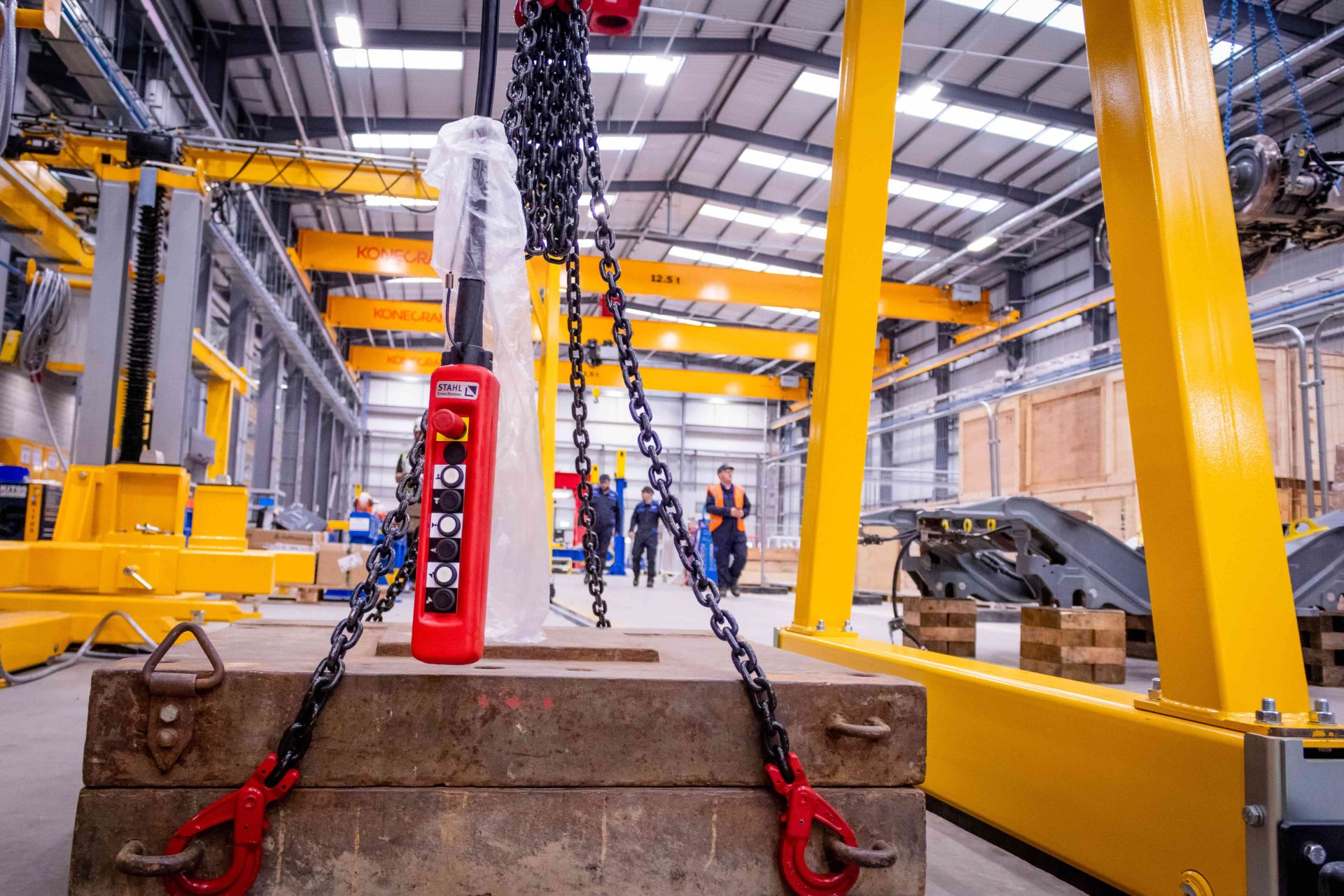
Each crane incorporates a travelling beam, hoist, control panel, motors and a moving portal A-frame, each operated independently using its own control pendant.
The chosen configuration required less supporting steelwork than the alternative designs considered, helping to reduce costs while providing a practical layout for Siemens’ maintenance operations.
Step 2: Design for future expansion
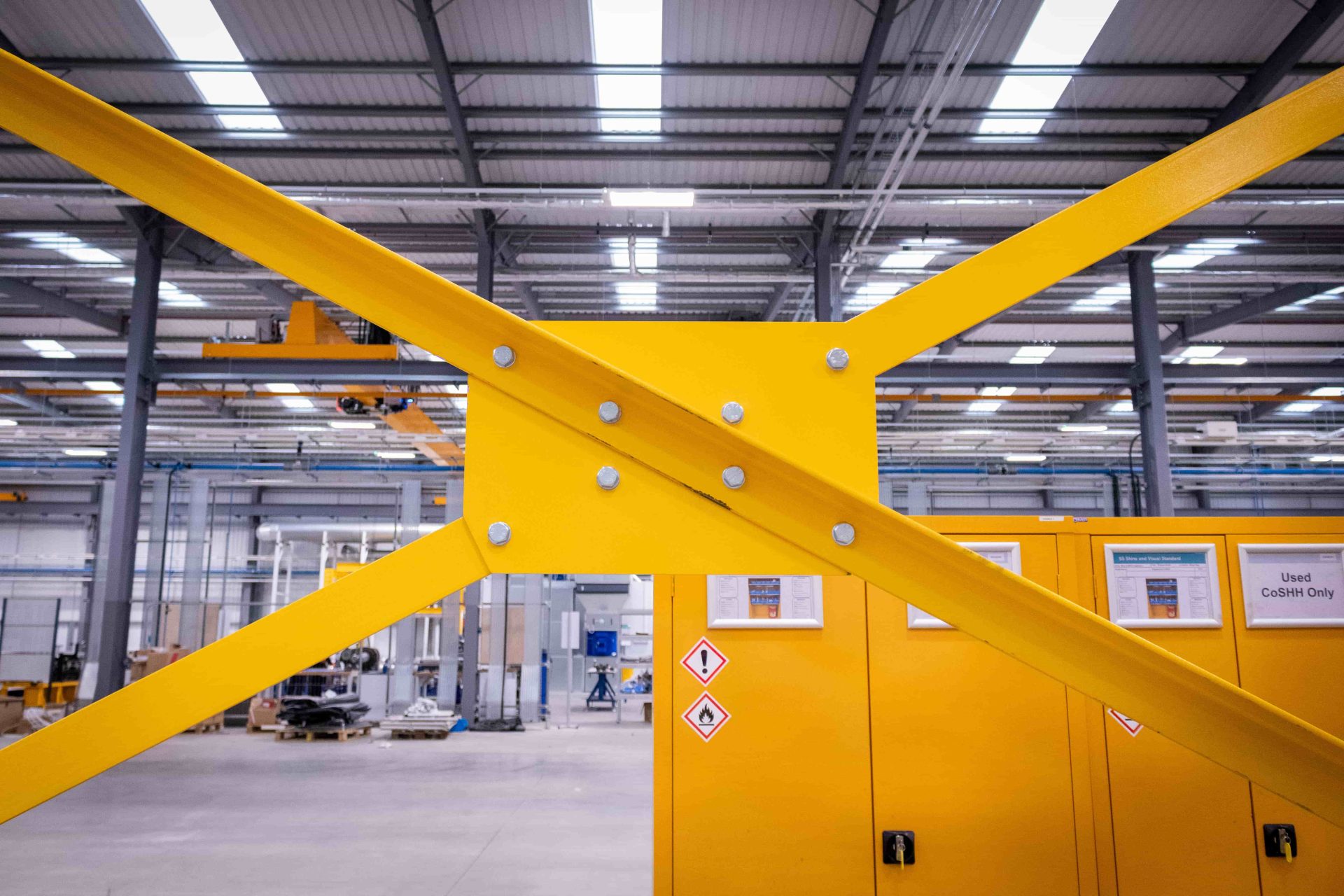
Bramley Engineering designed the raised gantry and floor rail with future expansion in mind, ensuring the supporting structure could accommodate the additional loads of up to four more semi-portal cranes.
This allows Siemens to add further cranes to the existing gantry and rail when required, without needing to replace the supporting infrastructure. The design provides capacity for future growth while keeping the initial installation focused on the five cranes currently required.
Step 3: Manufacture, pre-assemble and test before delivery
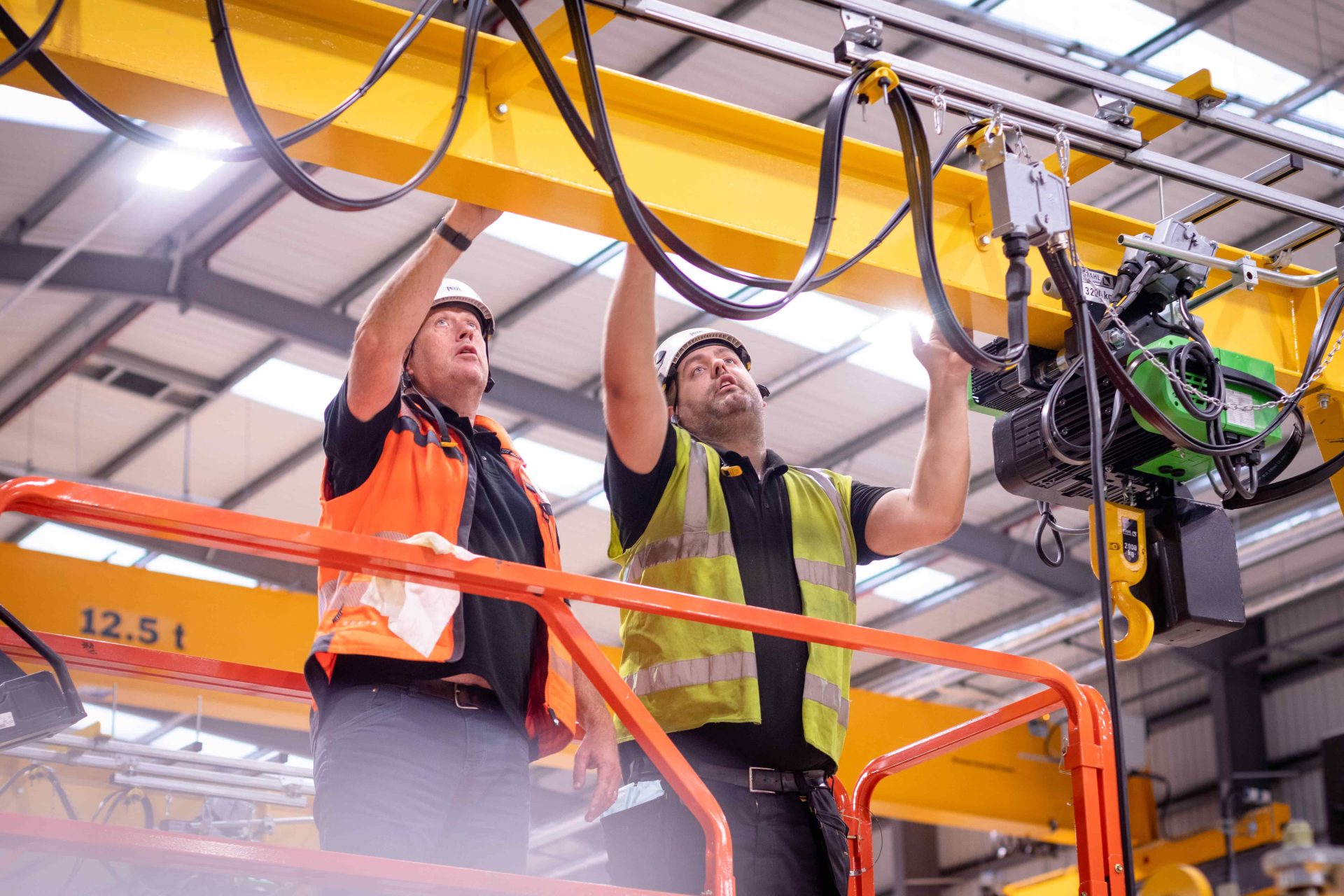
To make installation on site as straightforward as possible, Bramley Engineering planned the manufacturing process around completing as much assembly and testing as possible before delivery.
Procurement of the crane kit and fabrication progressed alongside each other, allowing the team to manufacture the crane structures while waiting for purchased components to arrive. This helped avoid unnecessary delays and keep the installation programme moving.
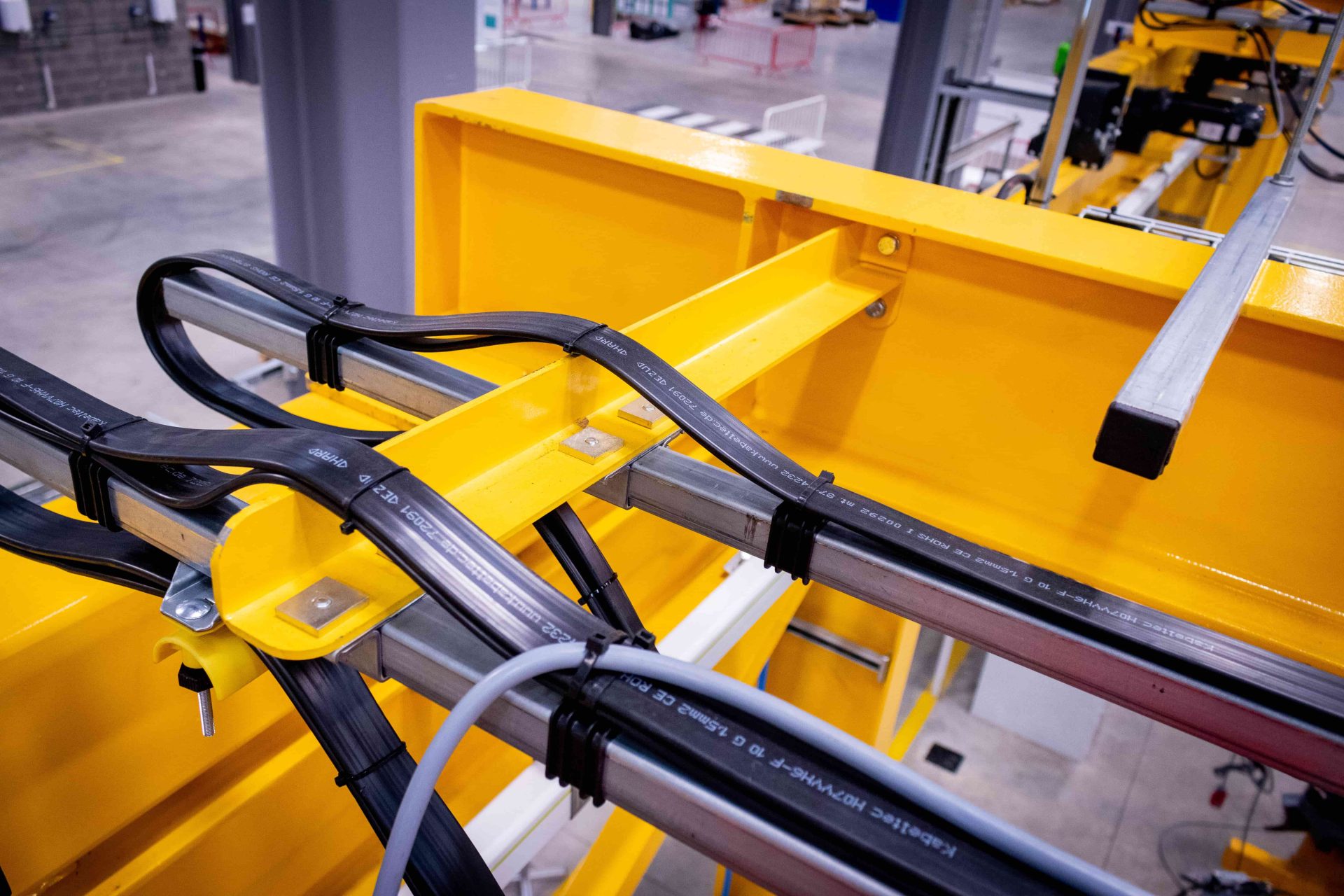
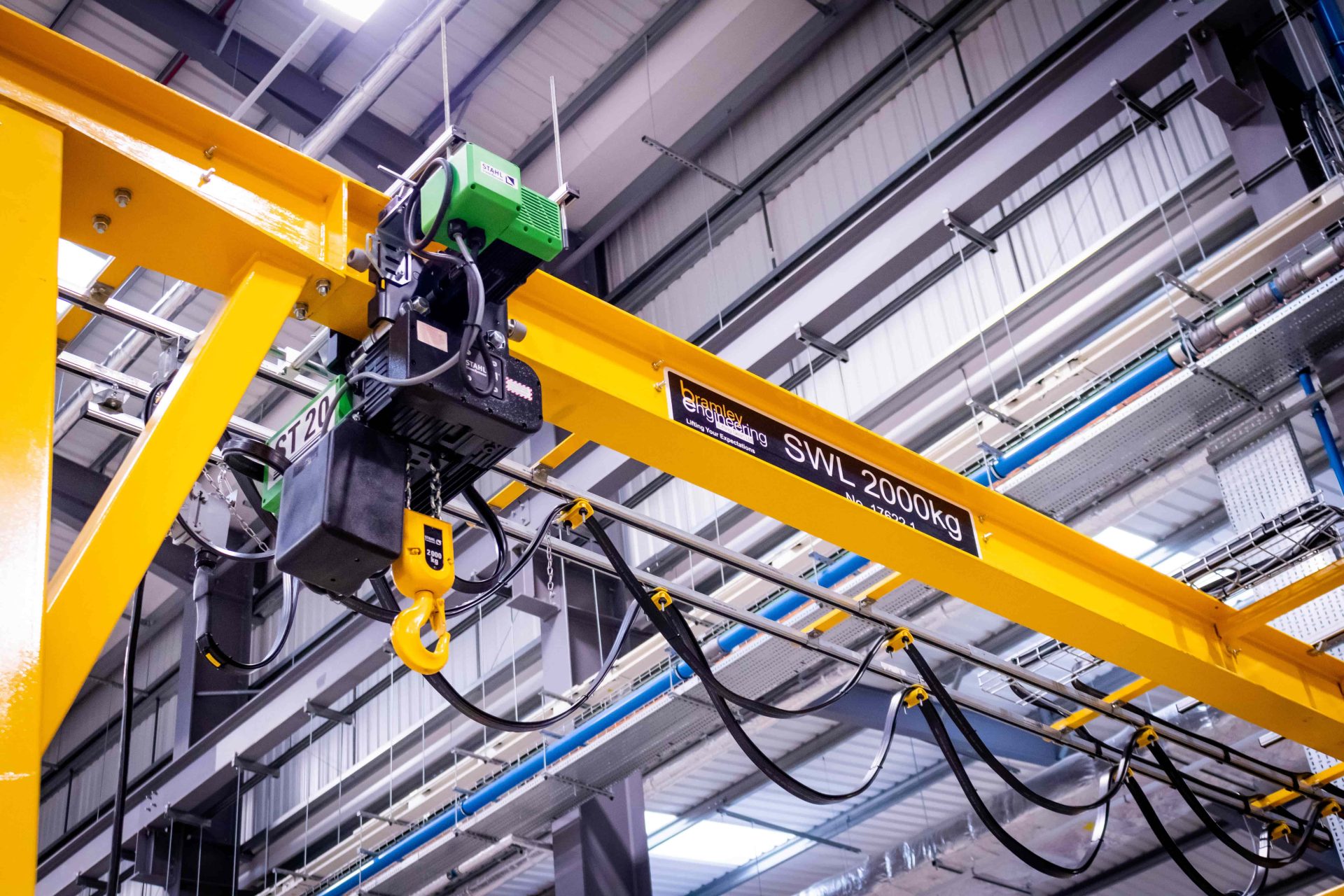
Bramley Engineering sourced CraneKits from STAHL CraneSystems, incorporating ST 2010 electric chain hoists, travel drives, end carriages, electrical controls, power supplies and pendant controllers.
The ST 2010-8/2 2/1 chain hoists provide a 2-tonne lifting capacity with two lifting speeds of 4 m/min and 1 m/min, giving operators greater control when positioning components during maintenance.
Sister company Bramley Aerospace also supported the manufacturing process, carrying out the profiling and folding of the festoon brackets used in the crane systems.
Once the components were ready, Bramley Engineering pre-assembled the travelling beams, hoists, control panels, motors, portal A-frames and end carriages. The assemblies underwent factory acceptance testing (FAT) before being stripped down for painting, transport and reassembly on site.
Completing this work at the factory allowed the team to check the equipment and address potential issues before delivery, reducing the amount of assembly and testing required at Siemens’ facility and supporting a smoother installation process.
Step 4: Install the semi-portal crane system in phases
Installation was carefully planned to minimise disruption to other work at the new facility.
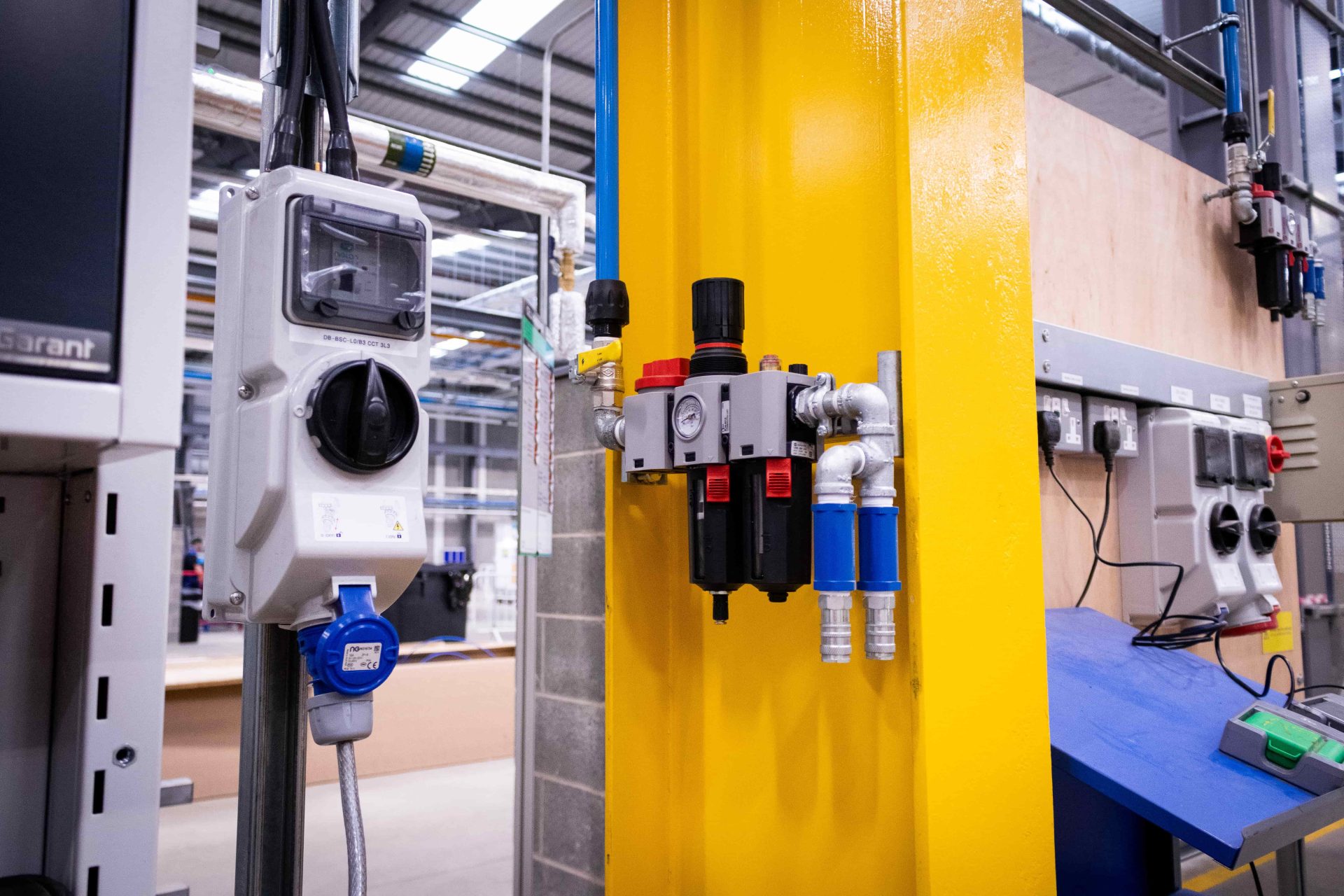
Bramley Engineering installed the supporting gantry steelwork first, positioning it along the wall to leave the central working area accessible.
This allowed other contractors to continue installing cable trays, control boxes, pneumatic pipework and other services while the remaining crane components were being manufactured.
As components became available, they were delivered, reassembled and installed in stages, helping to keep the wider construction programme moving.
Planning a lifting equipment installation as part of a larger project? Our team can coordinate with other contractors to keep work progressing. Get in touch to request a crane system quote.
Step 5: Testing and refining the crane movement
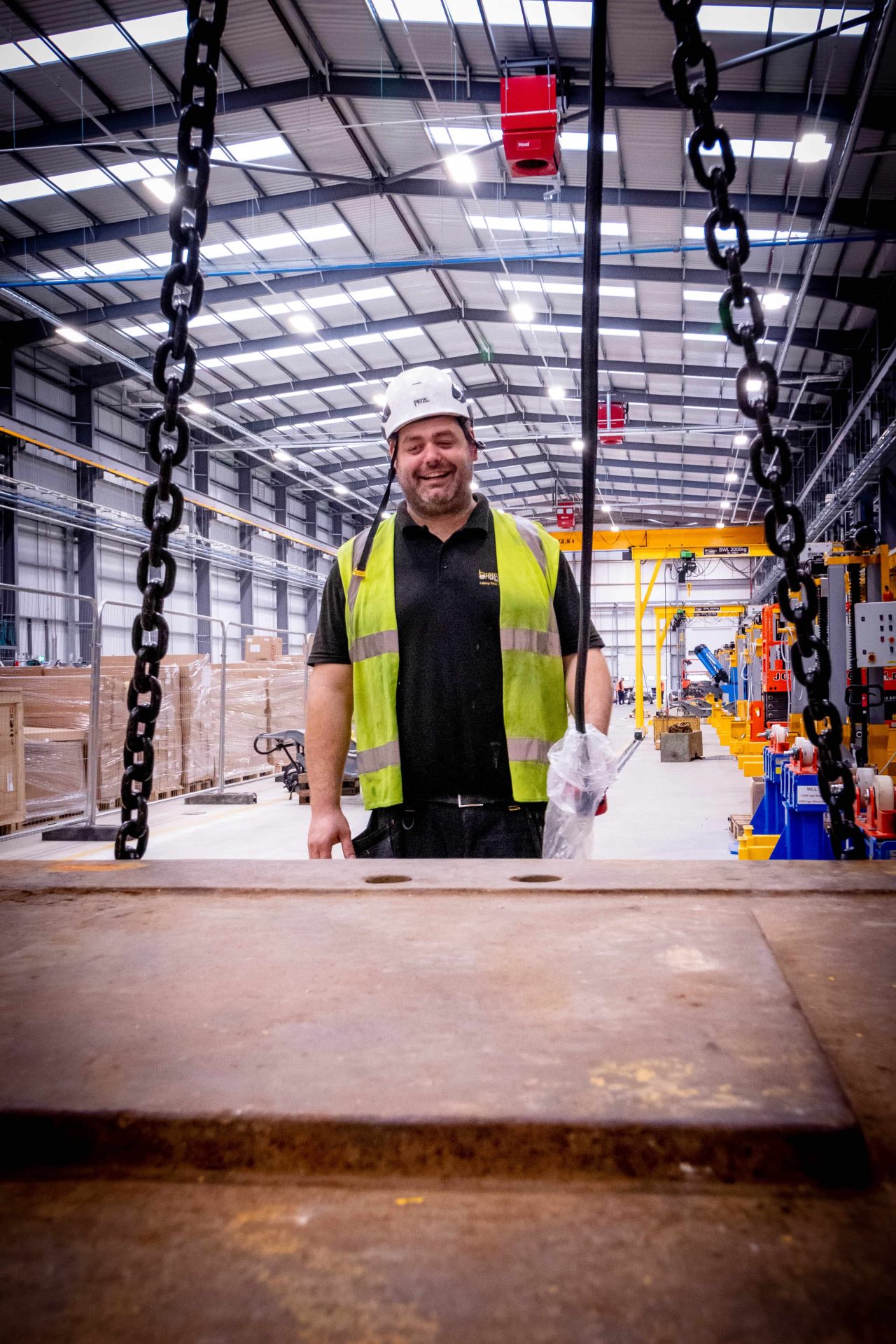
Every crane installed by Bramley Engineering undergoes thorough testing to verify its safety, performance and ease of use. The team also looks for opportunities to refine the equipment, ensuring it operates as effectively as possible in its intended working environment.
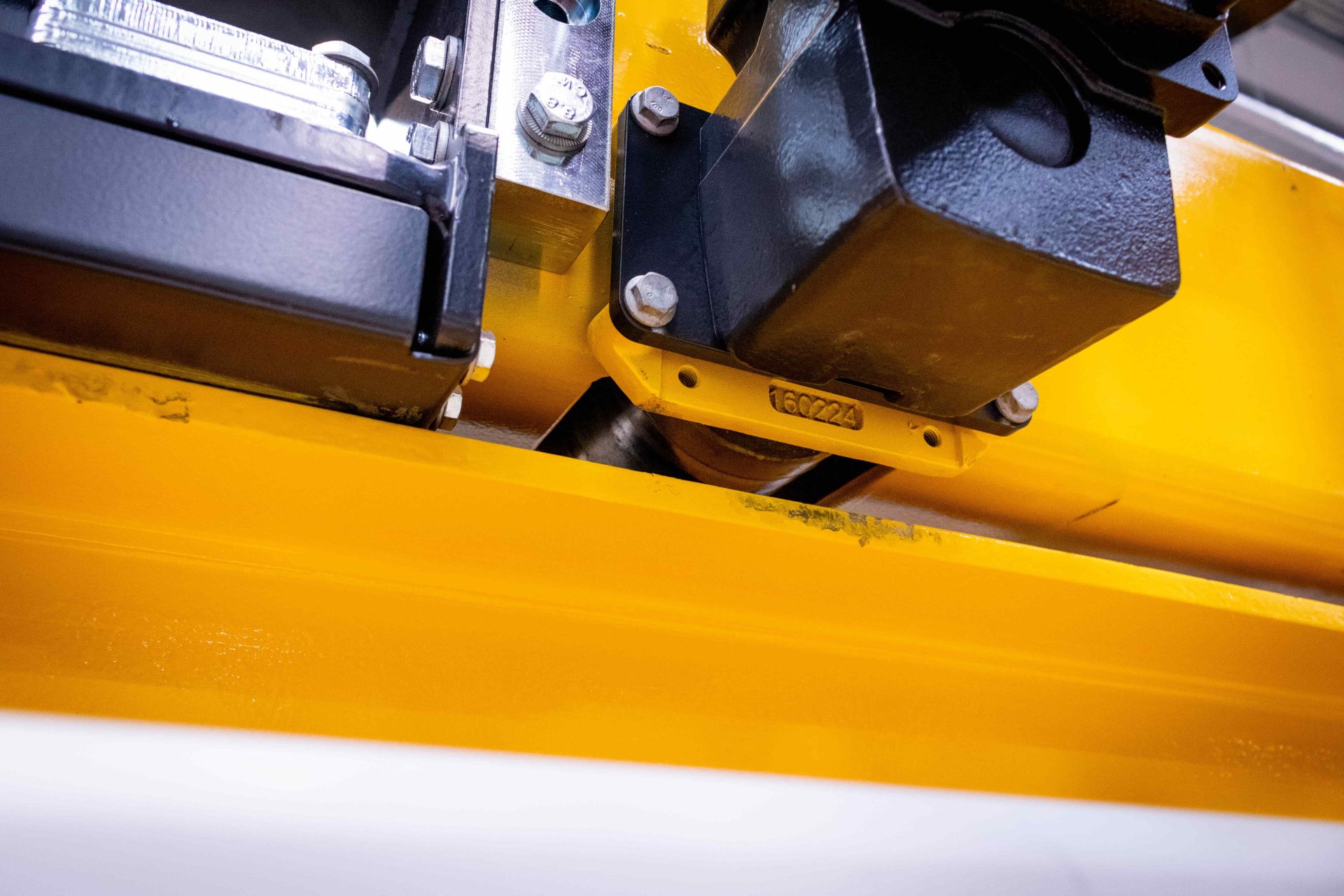
For the Siemens Goole project, this included factory acceptance testing (FAT) before delivery and proof-load testing on site. During testing, Bramley Engineering identified an opportunity to improve the movement and alignment of the crane’s end carriage, developing a revised buffer arrangement incorporating rail guide rollers to support smoother, more controlled travel.
Bramley’s approach goes beyond checking that equipment functions as intended. The team assesses how it performs in practice, considers operator safety and usability, and recommends improvements where they could benefit the customer.
The cranes are also subject to thorough examination in accordance with the Lifting Operations and Lifting Equipment Regulations 1998 (LOLER), helping to ensure the lifting equipment is safe and suitable for use.
The Results
The project delivered five bespoke semi-portal crane systems designed around Siemens Mobility’s bogey maintenance operations.
Key benefits include:
- Independent lifting operations: Five cranes, each with a 2-tonne safe working load (SWL), allow operators to carry out lifting tasks within their individual maintenance areas without relying on a shared crane.
- Improved access: The cranes can be moved into parking positions when not in use, keeping the central aisle clear for movement through the workshop.
- Reduced steelwork and cost: The semi-portal configuration requires less supporting steelwork than the alternative designs considered, delivering a more cost-effective solution without compromising the required lifting capability.
- Future expansion: The raised gantry and floor rail were engineered to support the additional loads of up to four more cranes, allowing Siemens to expand the system using the existing infrastructure.
- Efficient project delivery: Factory pre-assembly, testing and phased installation reduced the work required on site, allowing other contractors to continue their activities and helping to keep the wider construction programme moving.
- Attention to performance and safety: On-site testing allowed Bramley Engineering to identify opportunities for refinement and develop improvements to support smooth, controlled crane movement.
Delivering within a large, multi-contractor development also demonstrated Bramley Engineering’s ability to coordinate complex engineering work while maintaining a focus on quality and programme requirements.
The project builds on a longstanding relationship with Siemens. Following previous work at Siemens Rail’s Lincoln facility, Bramley Engineering received the ‘Working as One’ award, recognising its collaborative approach and contribution to the project.
The award was particularly meaningful to the team, reflecting the value Bramley Engineering places on strong customer relationships, clear communication and working effectively alongside other contractors.
Conclusion
The Siemens Goole project demonstrates Bramley Engineering’s ability to turn complex lifting requirements into practical, bespoke solutions designed around the customer’s operations.
From evaluating different crane configurations to coordinating installation within a major construction programme, the project highlights Bramley’s expertise in crane manufacture and its commitment to delivering safe, reliable lifting systems that meet both current and future requirements.
Need a bespoke crane solution for your facility?
Bramley Engineering designs, manufactures, installs and tests bespoke overhead cranes and lifting systems for industrial, manufacturing and infrastructure sites.
Whether you’re planning a new facility or upgrading existing lifting equipment, our team can develop a solution that fits your space, lifting requirements and day-to-day operations. Request a crane system quote.
Get in touch with our team:
Email: enquiries@bramleyengineering.co.uk
Phone: 01525 375225